




A Dermatologist's Step by Step Routine for Thinning Hair
Step by Step Routine for Thinning Hair
A Dermatologist's Five-Step Routine for Thinning Hair
A dermatologist's routine for thinning hair has five parts: cleanse the scalp regularly, condition to reduce breakage, apply a targeted scalp treatment twice daily, ease off tension and heat, and give it time. Expect about three months before density changes are visible and six for a fair assessment.
By Dr. Joyce Park, MD, Board-Certified Dermatologist & Founder of Kerativ
If you're dealing with thinning hair, I want to start by saying this is something I see all the time in clinic. It can feel frustrating, and sometimes more than a little overwhelming, especially with how much information is out there. But I want to reassure you that you've come to the right place!
What I try to do with patients is simplify it. You don't need a complicated routine, but you do need a consistent one that supports both your scalp and your hair over time.

I always come back to this idea: healthy scalp skin is the foundation for healthy hair. When the scalp environment is balanced, hydrated, and not inflamed, hair has a much better chance of growing and staying anchored. From there, the products you use can help support density, reduce shedding, and improve how your hair looks and feels day to day.
Let me build you a dermatologist-approved scalp and hair routine in a very practical way.
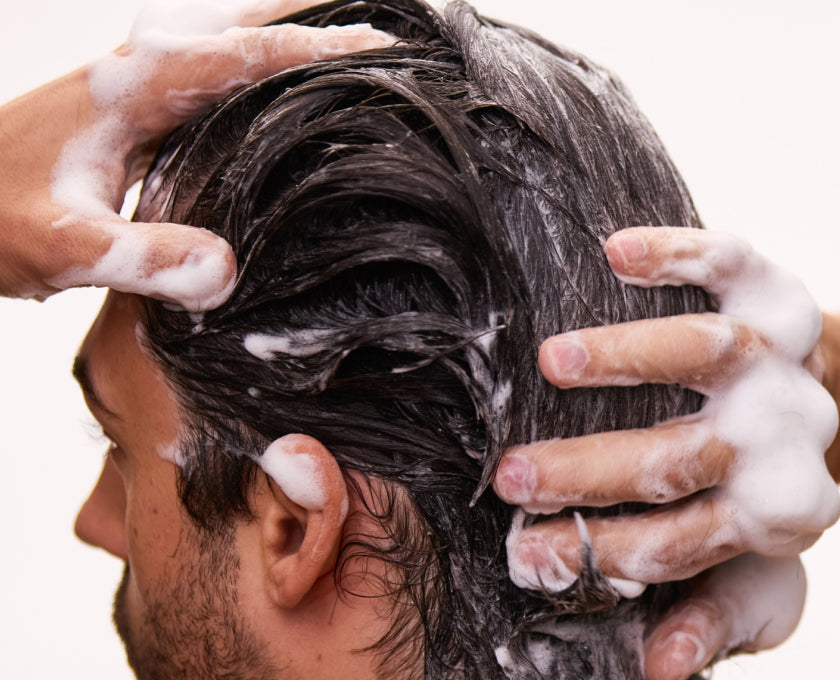
Step 1: Cleanse your scalp regularly
Cleansing is often underestimated, but it's one of the most important steps.
Throughout the week, oil, sweat, product buildup, and even environmental debris collect on the scalp. That buildup can sit around the follicles and affect the overall scalp environment. When patients tell me their scalp feels itchy, flaky, or just "off," this is often part of the picture. It doesn't help that social media keeps telling people you can "train" your scalp to produce less oil. That is simply not true!
But can shampoo actually help with hair loss? We know that a healthy scalp environment is foundational to having healthy hair, and how scalp health supports hair growth.
So the answer is yes, the shampoo you choose matters!

A good shampoo should cleanse without leaving the scalp feeling stripped or tight. I look for formulas that support the scalp barrier and help maintain balance rather than disrupt it.
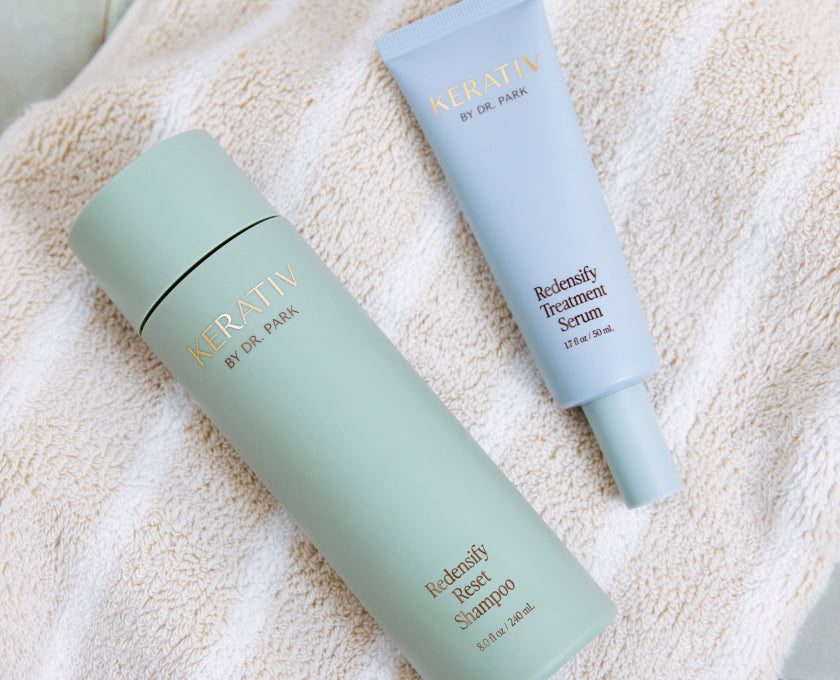
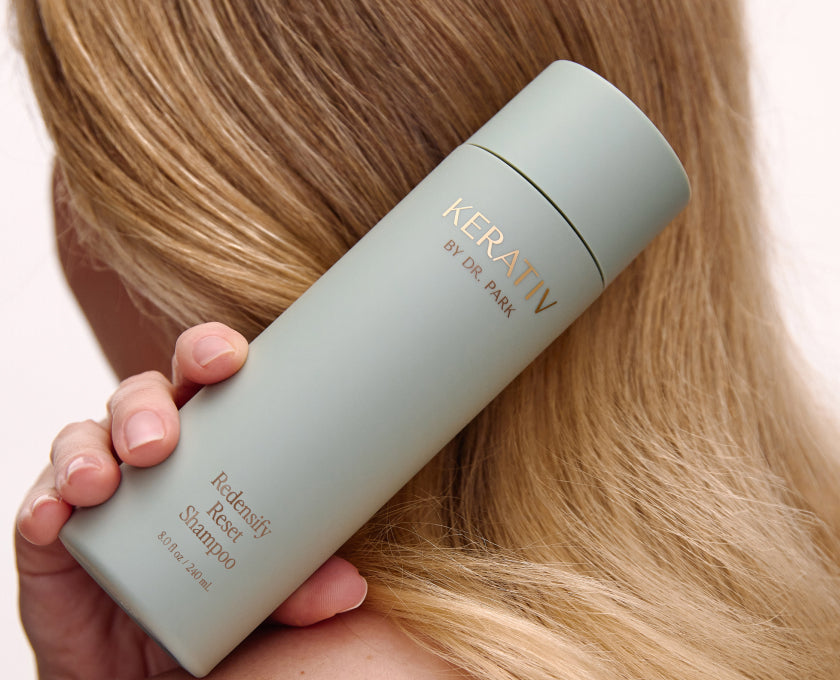
Kerativ's Redensify Reset Shampoo was designed with that in mind. It removes buildup while also supporting the scalp microbiome, and it includes velvet flower seed extract, which supports visibly increased hair diameter and thickness even after rinsing off.
If you have dandruff or seborrheic dermatitis, I usually recommend rotating in a medicated shampoo a few times a week. Look for ingredients like zinc pyrithione, selenium sulfide, or ketoconazole, an antifungal. You can alternate that with your regular shampoo so you're treating the underlying inflammation while still maintaining overall scalp health.
Step 2: Use a conditioner that supports fragile hair
I see a lot of patients skip conditioner because they're worried it will weigh their hair down. In reality, when hair is thinning, it's often more fragile, and conditioning becomes even more important.
A good conditioner helps reduce friction, improve manageability, and minimize breakage. That alone can make hair look fuller over time.
I tend to recommend lightweight, hydrating formulas that don't leave a heavy residue. Gel-cream textures are a nice balance. You can apply through the mid-lengths and ends, and if the formula is scalp-friendly, lightly near the roots as well.
Bond-building treatments are also reasonable to incorporate once or twice a week, especially if you color your hair or use heat regularly. They won't address shedding directly, but they can improve hair strength and overall appearance.
Step 3: Apply a targeted scalp treatment

This is the step where we're being very intentional about supporting hair density and reducing shedding.
There are different categories of ingredients that can be helpful here. Some support the hair cycle by prolonging the anagen growth phase, some improve the scalp environment, and others help with the appearance of thicker strands.
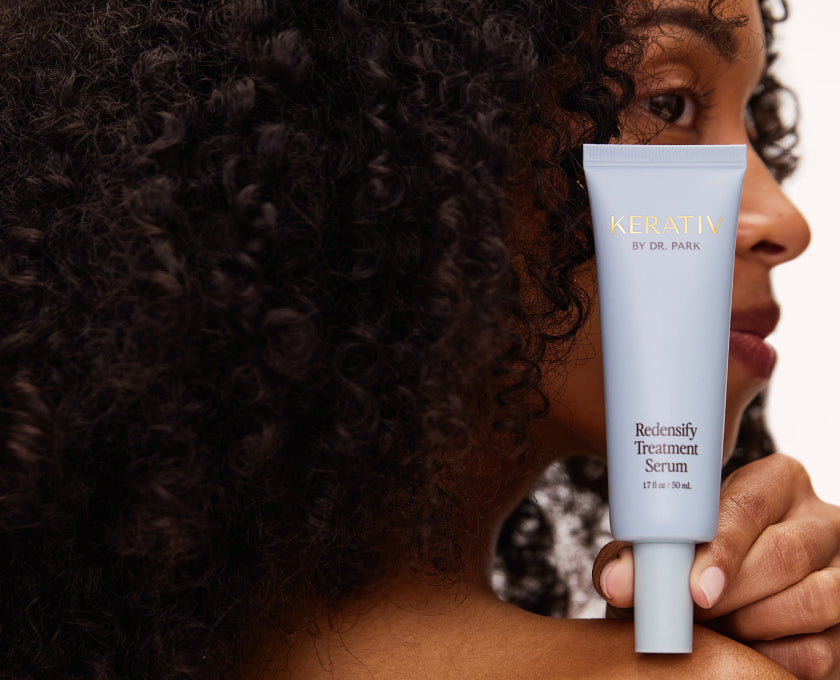
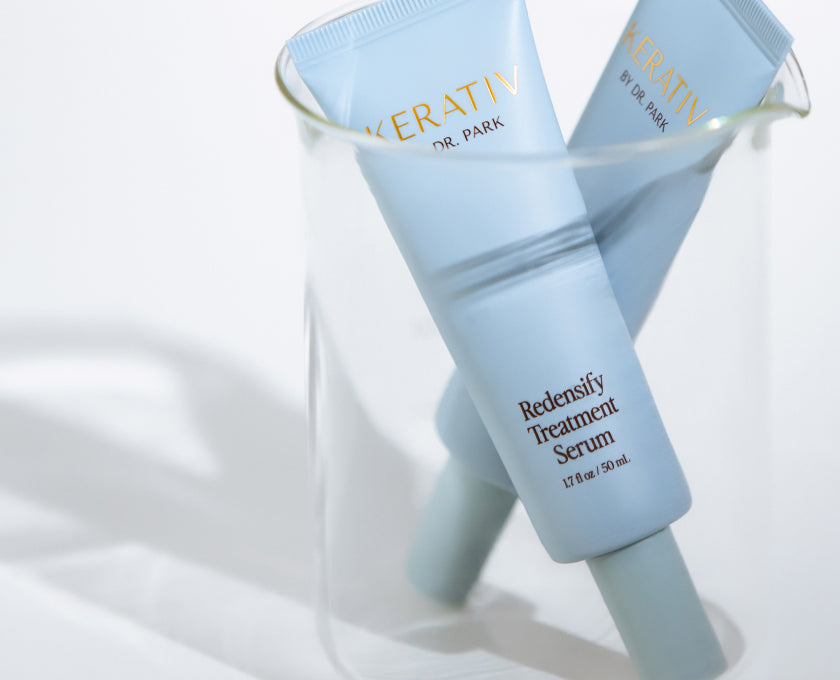
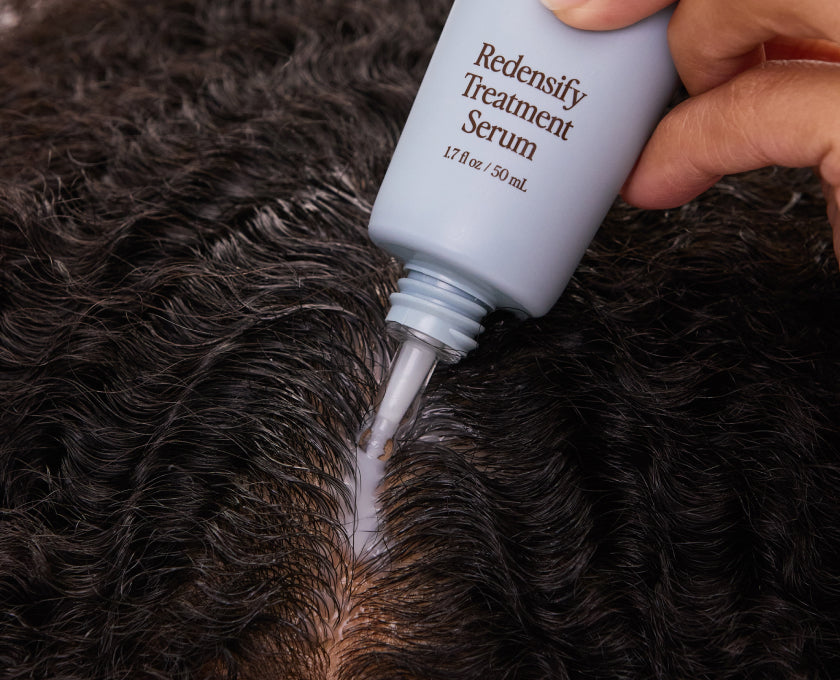
The Kerativ Redensify Treatment Serum was formulated to bring several of these approaches together, with ingredients like Redensyl, Kopexil, caffeine, adenosine, and botanical components that support a healthy follicle environment. This serum was clinically shown to increase hair density and volume in 3 months, and thickness in 6.*
I usually recommend applying a scalp serum twice daily, and taking a moment to gently massage it in. It doesn't need to be complicated or time-consuming. What matters most is that you keep up with it, so choose a serum that you enjoy using that doesn't disrupt your daily routine!
If you are already on a regimen including Minoxidil, an FDA approved medication for hair growth, our Kerativ Redensify Regimen was developed to complement that medication. If you haven't started Minoxidil yet or have reasons you don't want to use it, you can read more about minoxidil alternatives ranked by a dermatologist.
*Based on our 24-week clinical study of 32 participants, with an independent dermatologist evaluation of hair density, volume, and thickness. Results may vary.
Step 4: Be mindful of daily habits
This is something we don't talk about enough, but I see the impact of it all the time.
Repeated stress on the hair and scalp can contribute to breakage and shedding. Things like tight hairstyles, frequent high-heat styling, or being rough with wet hair can all add up over time.
Small changes make a difference here. Looser hairstyles, being a little more gentle when brushing, and letting hair dry in a way that minimizes stress on the strands can all help support the work you're doing with your products. I've compiled my top 5 healthy hair habits from a dermatologist for you to look at.
Step 5: Give it time
This is often the hardest part. I tell my patients they have to be patient, and if a treatment out there promises immediate growth within days to weeks, it is probably too good to be true.
Hair grows slowly, and the hair cycle itself spans several months. You might see improvements in scalp skin or in the quality of hair, but you just won't see meaningful changes in hair growth or new baby hairs sprouting in just a few weeks. I usually set expectations around three months to start noticing improvement, and closer to six months for more visible changes. Even for conditions like telogen effluvium, which reverse naturally and with time, you have to give it 6 to 12 months.
This is why consistency matters so much. The routine only works if you're able to stick with it.
What I Tell My Patients
The single biggest reason routines fail is that people abandon them around week six, right when nothing visible has happened yet and it starts to feel pointless, so before you buy anything, decide honestly whether you can do this twice a day for six months. If the answer is no, simplify until it is yes, because a three-step routine you actually complete will outperform a seven-step routine you quit. And if you have been genuinely consistent for six months and still see no change, that is the point to stop adjusting products and see a dermatologist.
 Dr. Joyce Park Dermatologist & Founder of Kerativ
Summary
So that's it, that's my practical guide to building a simple yet effective scalp and hair routine for thinning hair. Focus on keeping your scalp healthy, supporting your hair with the right products, and staying consistent over time. That's what tends to make the biggest difference in what I see, both in clinic and in real life.
What's Next
For the habits that sit underneath all of this, read 5 healthy hair habits from a dermatologist. If you want to understand the science behind step one, how scalp health supports hair growth covers it. And if your shedding came on suddenly rather than gradually, telogen effluvium is the more likely explanation.
Frequently Asked Questions
Should I apply a scalp serum to wet or dry hair?
Either works, and the right answer is whichever one you will actually do. A dry scalp gives you the most precise application and nothing dilutes the product. A damp scalp can be easier to section, especially if your hair is thick. What I would avoid is applying to soaking wet hair straight out of the shower, because the product spreads across the strands instead of reaching the skin. Towel dry first, then part and apply.
Can I use a scalp serum if I have dandruff?
Yes, but treat the dandruff at the same time rather than hoping the serum handles it. Flaking and inflammation come from a different process, usually yeast overgrowth, so use a dandruff treatment alongside your scalp serum. In clinic I usually have people rotate in a medicated shampoo with zinc pyrithione, selenium sulfide, or ketoconazole a few times a week and keep the serum going as usual. Of note, the Redensify Reset Shampoo contains ingredients to rebalance the scalp microbiome, which can help cut down on oil. A calmer scalp is a better environment for everything else you are doing.
Do I need to change my routine in winter or summer?
Not fundamentally, but small adjustments are reasonable. Many people experience more shedding in the fall, which represents a normal seasonal shed, so focusing on scalp health is always a bonus. Scalps tend to get drier in winter with indoor heat, so you may want to shampoo slightly less often or lean on more hydrating formulas. In summer, more sweat and more sun usually means washing more, not less, because buildup and salt sitting on the scalp cause more irritation than shampoo does. The serum stays twice daily year round. Consistency is the part that matters!
If I use minoxidil, what order should I apply things in?
I recommend spacing them out rather than layering, so scalp serum in the morning and minoxidil at night, or the reverse. If you do need to apply both at the same time, put the minoxidil on first, let it dry completely, then apply the serum. Both go onto the scalp skin, not the hair. And check with your own dermatologist, because if you are using other topicals the sequencing may need to change.
Are scalp scrubs and exfoliants worth adding?
Occasionally, for the right person. If you use a lot of dry shampoo, heavy styling products, or you have noticeable buildup, a scalp exfoliant once every week or two can help. If your scalp is already dry, sensitive, or reactive, it will usually do more harm than good. Most people get what they need from washing properly and letting the shampoo sit for a minute before rinsing. I would call it optional, not foundational.
Read more
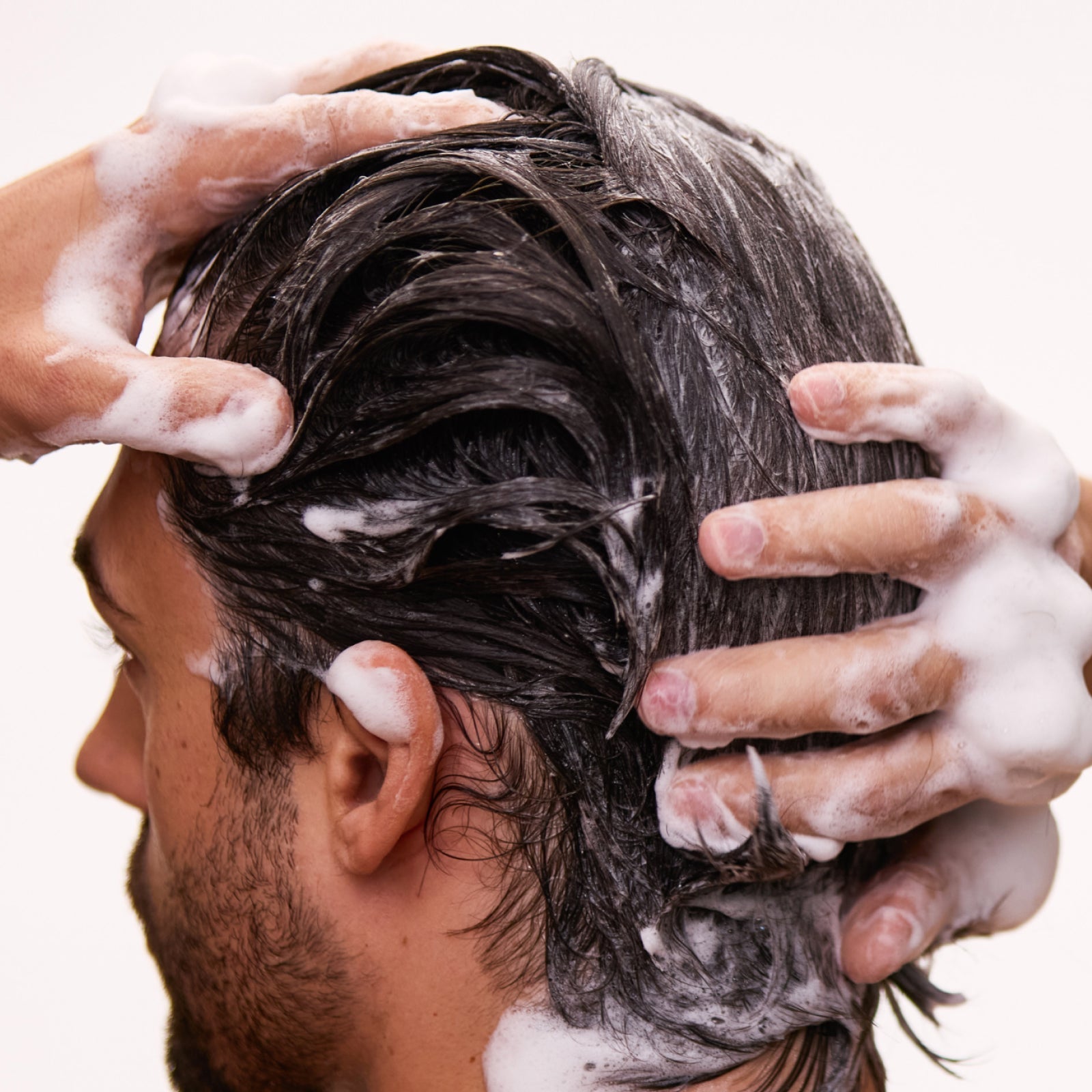
A thoughtfully formulated shampoo can improve the scalp environment and support overall follicle health, which may help promote stronger, more resilient hair over time.
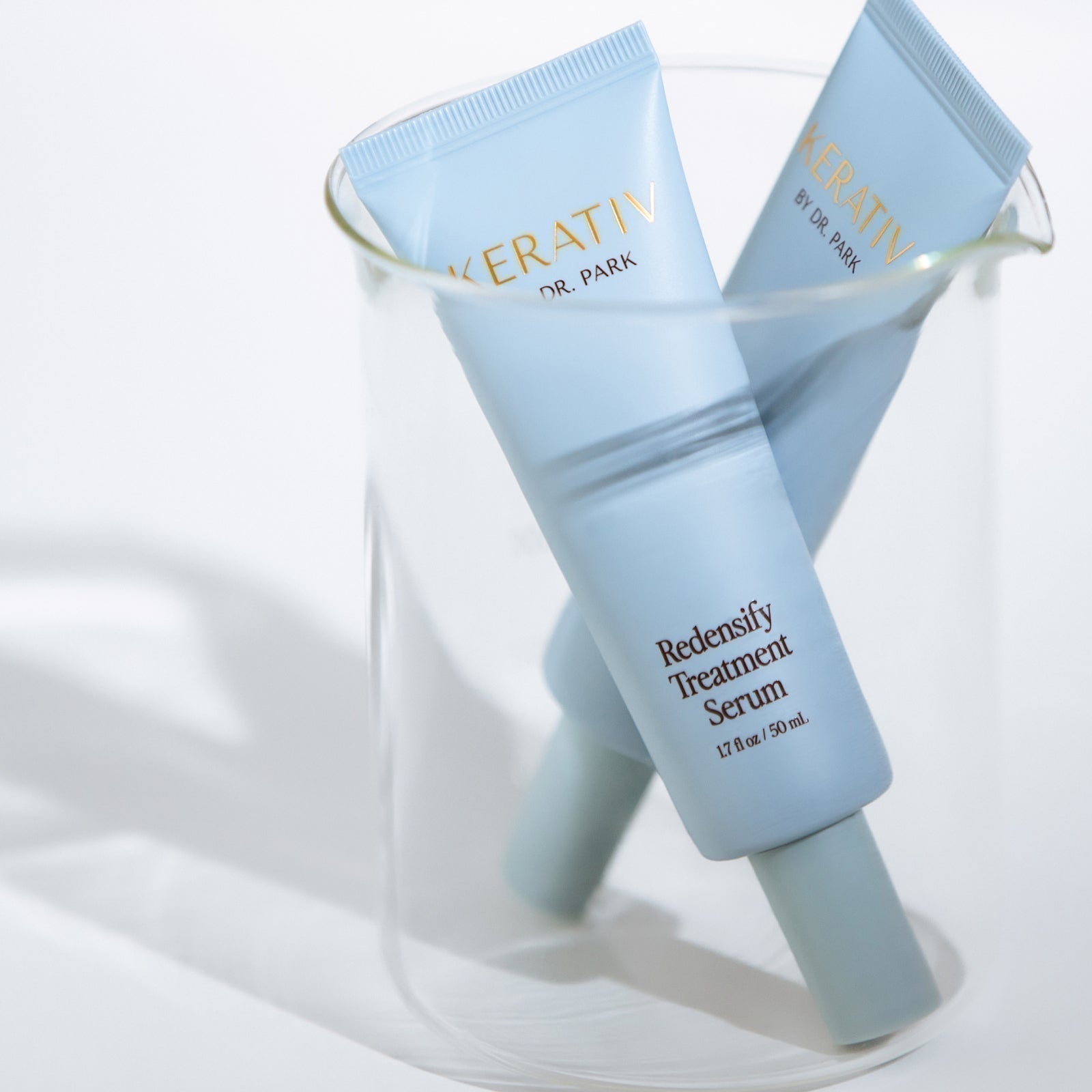
This is a first look at our 24-week clinical study evaluating the Kerativ Redensify Treatment Serum.