


Why Does Hair Shed More in Late Summer and Fall?
SEASONAL HAIR SHEDDING
Most people shed more hair in late summer and fall because a larger share of follicles entered the resting phase months earlier and are releasing together. It is normal, temporary, and it usually settles within a few months. Shedding past six months, however, deserves a dermatologist's evaluation.
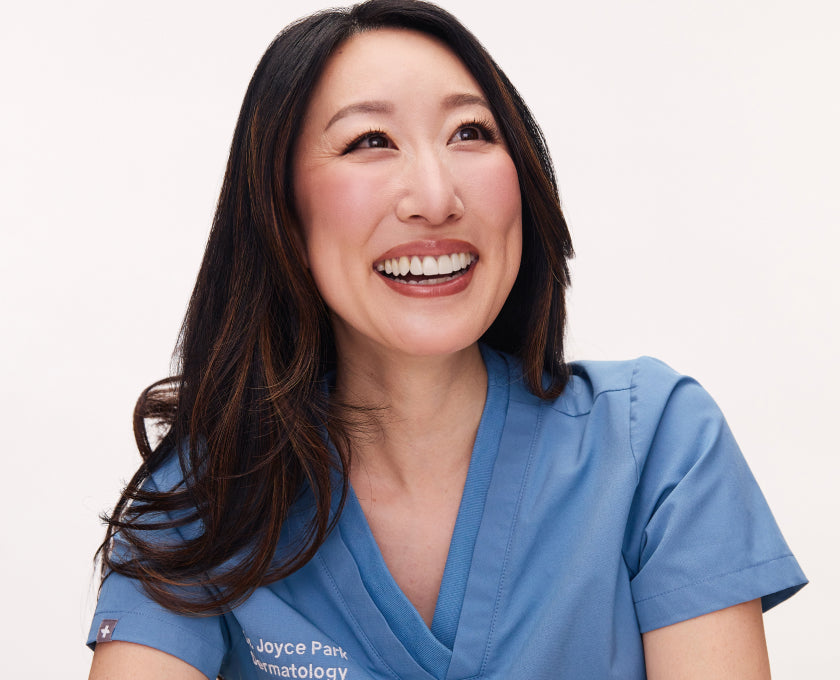
By Dr. Joyce Park, MD, Board-Certified Dermatologist and Founder of Kerativ
What Is Seasonal Hair Shedding?
A 34-year-old teacher came in the first week of October holding out her phone, showing me a photo of her shower drain. She had taken it that morning because she wanted proof she was not imagining things. Then she asked the question she had been carrying for weeks: was she going bald?
 She was, in fact, not going bald. What she was describing, a heavier shed that shows up in early autumn and was not there in June, is one of the most common presentations I see every fall. It has a name, seasonal hair shedding, and it is actually not the same thing as losing your hair.
It is normal to shed between 50 and 100 hairs a day at baseline. A seasonal shift pushes that number up for a few weeks, then lets it fall back.
Why Does Hair Shed More in Late Summer and Fall?
The way I explain it in clinic: your follicles are not all on the same schedule. Each one cycles through growth (anagen), a brief transition (catagen), and rest (telogen), and in a healthy scalp roughly 85% are growing while about 15% rest. A follicle entering the rest phase does not release its hair right away; it holds onto it, as a club hair, for around three months. Research on the seasonality of hair shedding has found that the resting share climbs through mid to late summer. Add three months to a July shift and you land squarely in September, October and November.
I joke that autumn takes the blame for a decision the follicles quietly made back in July, because by the time you see it in the drain, the interesting part is already three months behind you.
This is why the shampoo you switched to in September is almost always innocent. The change was not in the bathroom. It was in the follicle, and it happened in the summer.
Before I call anything seasonal, though, I rule out what looks identical from the outside: thyroid function, ferritin (your iron stores), sometimes androgen levels, plus a history covering recent illness, surgery, significant weight loss, a new medication, or pregnancy in the last year. Any of those can produce a shed on the same timeline, and none of them resolves just because the season changes.
How Do You Know If It Is Seasonal Shedding or Something Else?

Seasonal shedding has a recognizable shape. Here is what I look for.
- The timing tracks the calendar rather than an event, with no obvious trigger two to three months earlier.
- The shedding is diffuse across the whole scalp, not patchy, and not concentrated at the temples or crown.
- The hairs release easily from the root, each with a small pale bulb, which is the club hair.
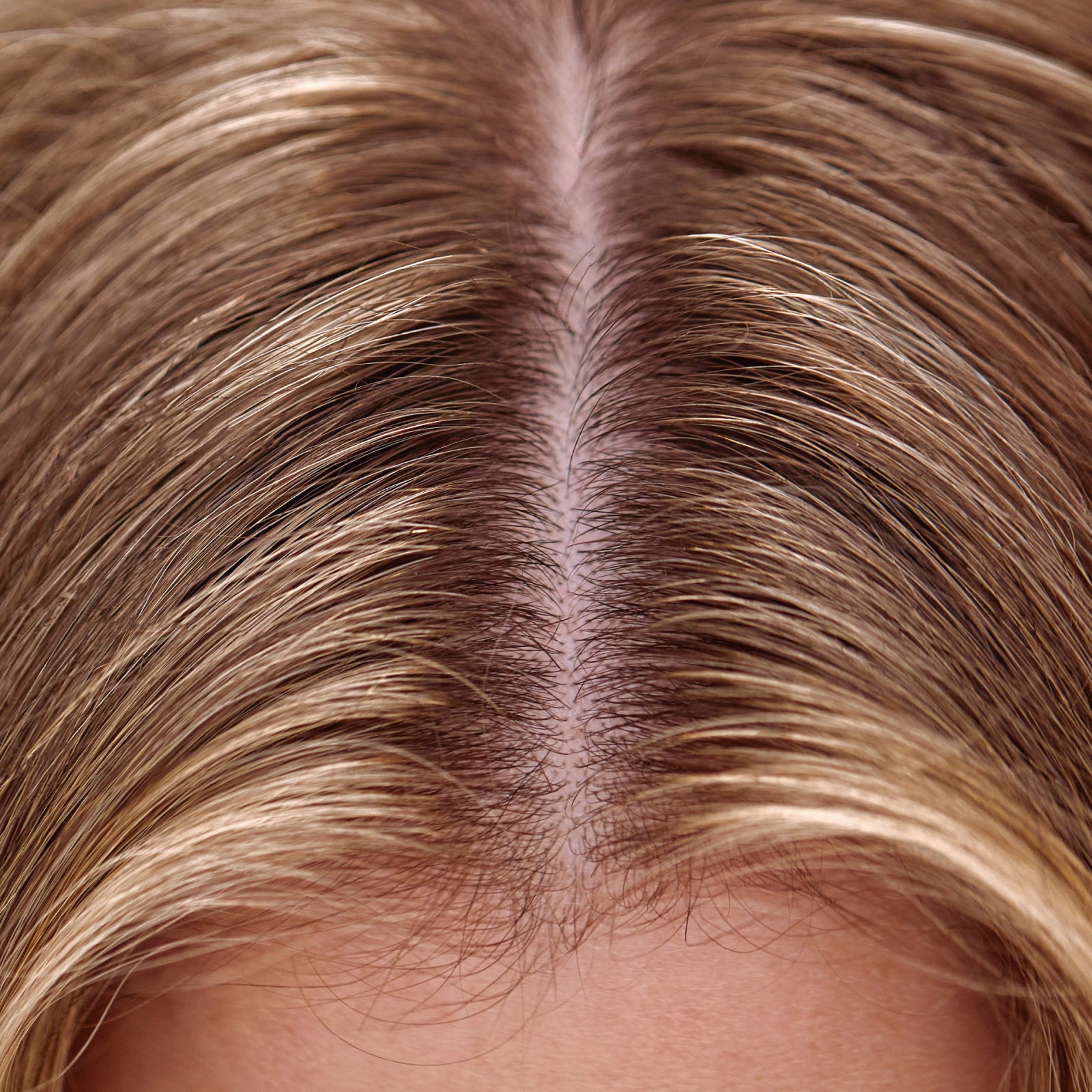
- Your part line looks about the same width it did in spring, even though your ponytail feels thinner.
- You notice it in the shower and on the pillow rather than in the mirror.
- The heavy phase runs roughly six to twelve weeks and then eases, rather than holding steady for months.
- If it began two to three months after a fever, surgery, crash diet or new prescription, that is heavy shedding that lasts longer than a season.
- If your part is measurably wider than last year, or the hairs coming back in are finer and shorter, that points toward female pattern thinning.
One more thing worth knowing. Washing less during a shed does not reduce shedding, it just collects it, so the day you finally do wash looks alarming!
What I Tell My Patients
A seasonal shed usually stops on its own, and while you can't prevent it or hasten its resolution, what you can control is the condition of the scalp your new hairs grow into. But if it is still running at the same rate six months from now, or your part is widening, get it examined by a dermatologist.
 Dr. Joyce Park Dermatologist & Founder of Kerativ
What Helps During a Seasonal Shed?
The honest answer is that time does most of the work, and everything else is about not making the window worse.
The hairs coming out this month are already finished. What you can influence is the environment the replacements grow into, and that environment is the scalp, which is skin.
So I would challenge you to be specific about what you are looking for. In a scalp serum: fragrance-free, alcohol-free, built around actives with published data rather than ingredients that got popular on video, with a texture that you will actually use twice a day for six months. In a shampoo, expect more than cleansing.
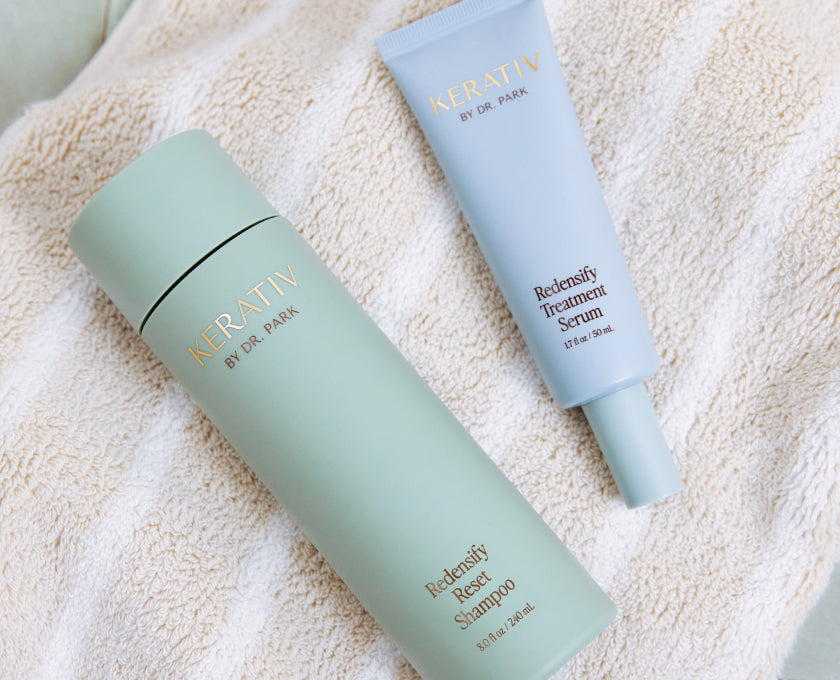
Of note, this is exactly why I formulated the Redensify Treatment Serum.

The Serum
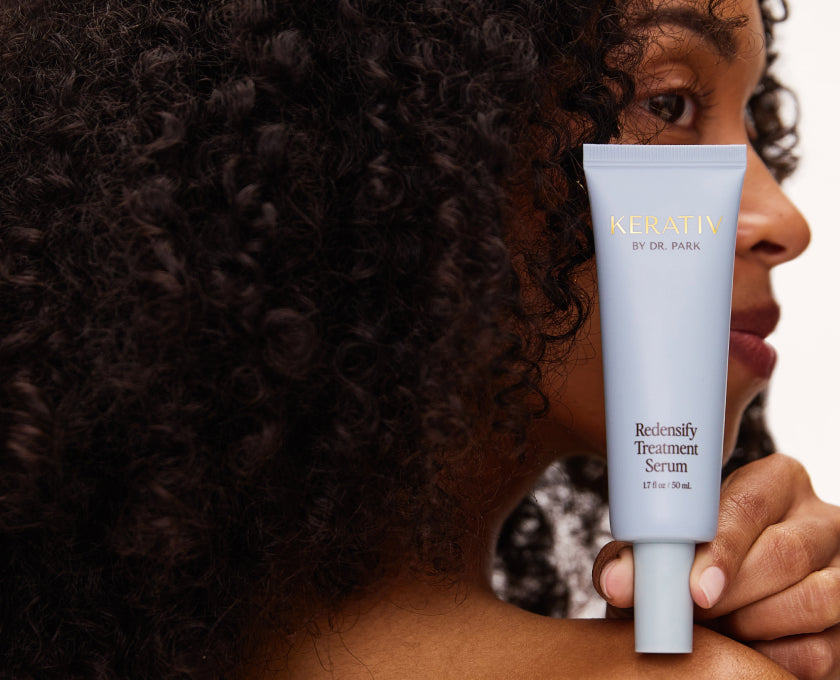
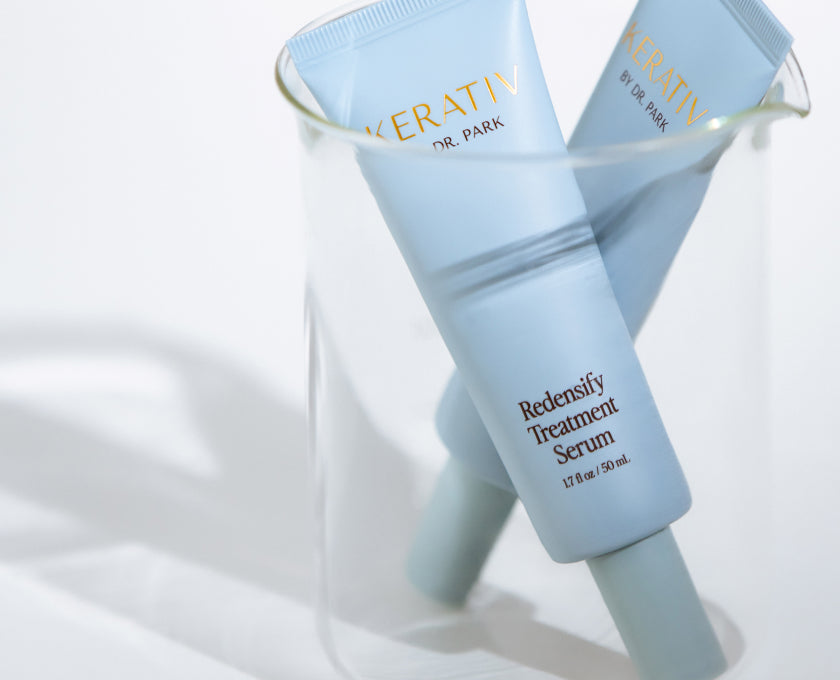
Redensify Treatment Serum
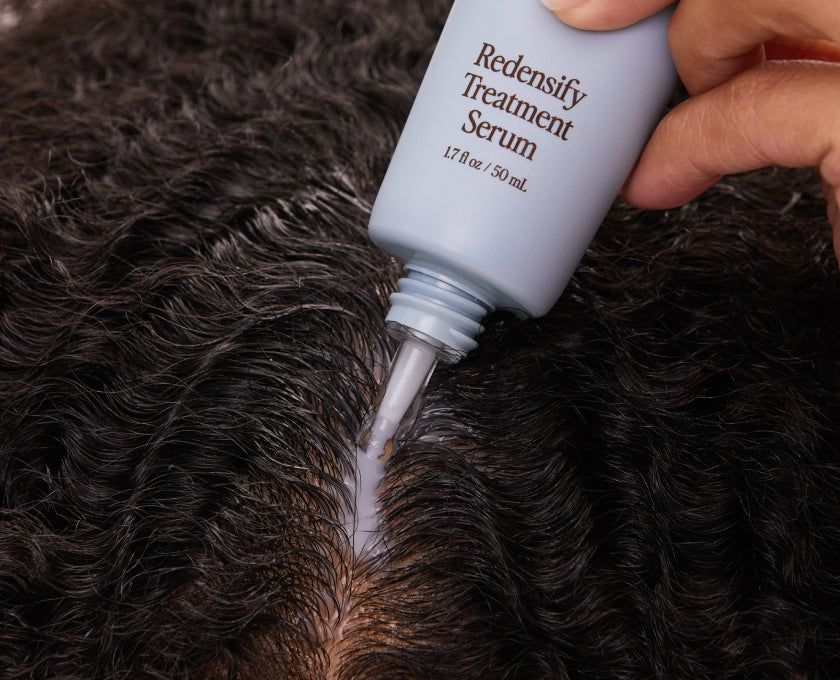
A dermatologist-developed, fragrance-free scalp serum that nourishes the scalp and follicles to support fuller, denser, healthier-looking hair. Clinically shown to increase hair density and volume in 3 months, and thickness in 6.* Apply to a dry or damp scalp with the needle-nose tip, massage in, and do not rinse. Twice daily, without interruption.

The Shampoo
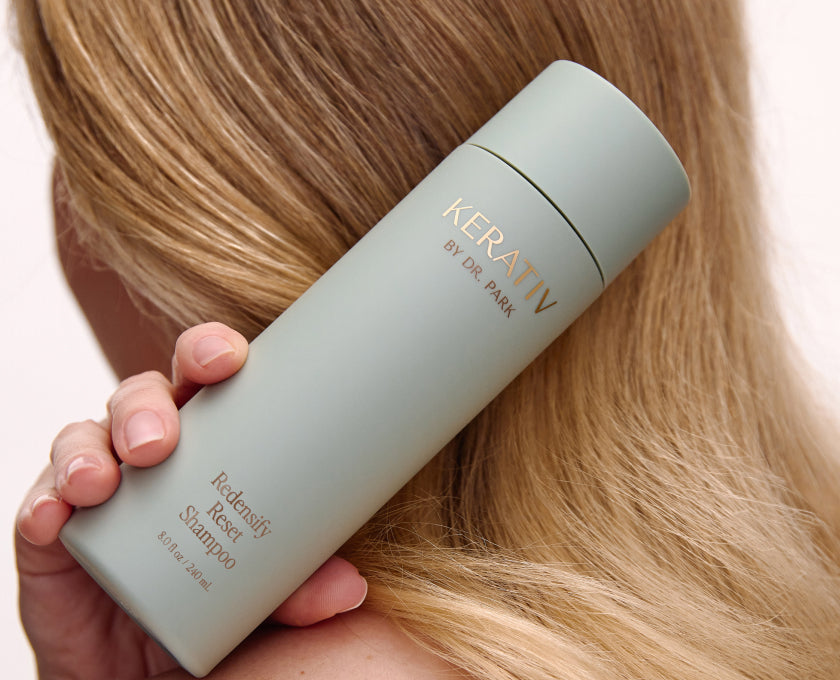
Redensify Reset Shampoo
A dermatologist-developed, sulfate-free gel shampoo that gently cleanses while adding lightweight volume to fine strands. It calms and soothes the scalp, rebalances the scalp microbiome through a chlorella prebiotic, and visibly enhances hair diameter for a denser appearance, an effect that persists after you rinse.
Why Scalp-First Care Matters During a Shed
Supports a healthy scalp environment. Zinc PCA helps control excess sebum and supports comfortable skin.
Rebalances the scalp microbiome. The chlorella prebiotic in the Reset Shampoo does this, which is a shampoo job rather than a serum one.
Supports the appearance of fuller, denser hair. In an independent 24-week clinical study of the Kerativ Redensify Treatment Serum, 100% of participants showed improvement in hair density and volume, and 97% in hair thickness, as evaluated by a licensed dermatologist.*
Rewards consistency over intensity. Nothing here works on a two-week timeline. Consistency is what matters, not intensity!
Cosmetic products are not drugs and are not intended to diagnose, treat, cure, or prevent any disease. If your shedding continues beyond six months, or if you notice widening at the part or patchy loss, see a board-certified dermatologist for evaluation. The Redensify Treatment Serum contains Adapinoid, a retinoid derivative. Use sunscreen and take sun protective measures. Not for use during pregnancy or while breastfeeding. For external use only. Avoid eye contact. Discontinue use and consult your doctor if irritation occurs.
*Based on a 24-week clinical study with 32 participants, dermatologist-evaluated. Results may vary.
Frequently Asked Questions
How many hairs a day is normal to lose in the fall?
The figure most often quoted is 50 to 100 hairs a day, and more than 100 in 24 hours starts to suggest something beyond ordinary turnover. That being said, counting is not a test I find useful, because the number swings with how often you wash and how long your hair is, and the counting itself makes people more anxious rather than better informed. What I track instead is the trajectory over 6 to 8 weeks and whether anything has changed at the part line.
Should I change my shampoo or start new products during a seasonal shed?
I advise against starting three new things at once, and not because any of them would harm you, but because you lose the ability to tell which one did anything. A seasonal shed resolves on its own inside roughly the same window a new product would be taking credit for. Make one change, hold everything else steady, and give it 3 months before you judge it.
Is there anything I can do in summer to reduce fall shedding?
You cannot pre-empt the cycle and I would not suggest otherwise, but the summer inputs that make an autumn shed feel worse are largely modifiable: sun on an exposed part line, chlorine or other potential irritants left sitting on the scalp, tight styles worn for weeks in the heat. When was the last time you used SPF on your scalp? A powder or spray SPF along the part through July and August is a small habit, but worth doing!
Does seasonal shedding affect men and women differently?
The seasonal pattern shows up in both, but the consequence differs, and as a dermatologist I want to highlight this point: in someone who already has androgenetic alopecia, meaning pattern thinning, a seasonal shed can unmask thinning that had been quietly progressing, which is why so many people date their hair loss to one specific autumn. If that sounds like you, the shed is not the problem to solve, it is the alarm, and the sooner you have it evaluated the more there is to preserve.
How long does it take to see a difference if I start a scalp routine now?
In the first few weeks your scalp begins to rebalance, and some people notice a brief increase in shedding as follicles shift into a healthier cycle, which is normal and temporary. Around 3 months, hair starts to look fuller and denser. Thickness takes longer: in our clinical study, dermatologist-assessed thickness did not change measurably at 12 weeks but improved significantly by 24, which is why I advise committing to at least 6 months before judging any scalp routine, including ours.
What to Read Next
If your shedding started two or three months after a fever, a surgery, or a genuinely hard stretch rather than with the calendar, read heavy shedding that lasts longer than a season next. If you had a baby this year, the shed that follows pregnancy covers a version of this with its own ending. And if you would rather build something steadier than an annual September panic, a dermatologist's step by step routine for thinning hair is where I would start.
Read more
As estrogen levels shift during perimenopause and drop further into menopause, many women notice their hair becoming finer. There are things you can do to help.
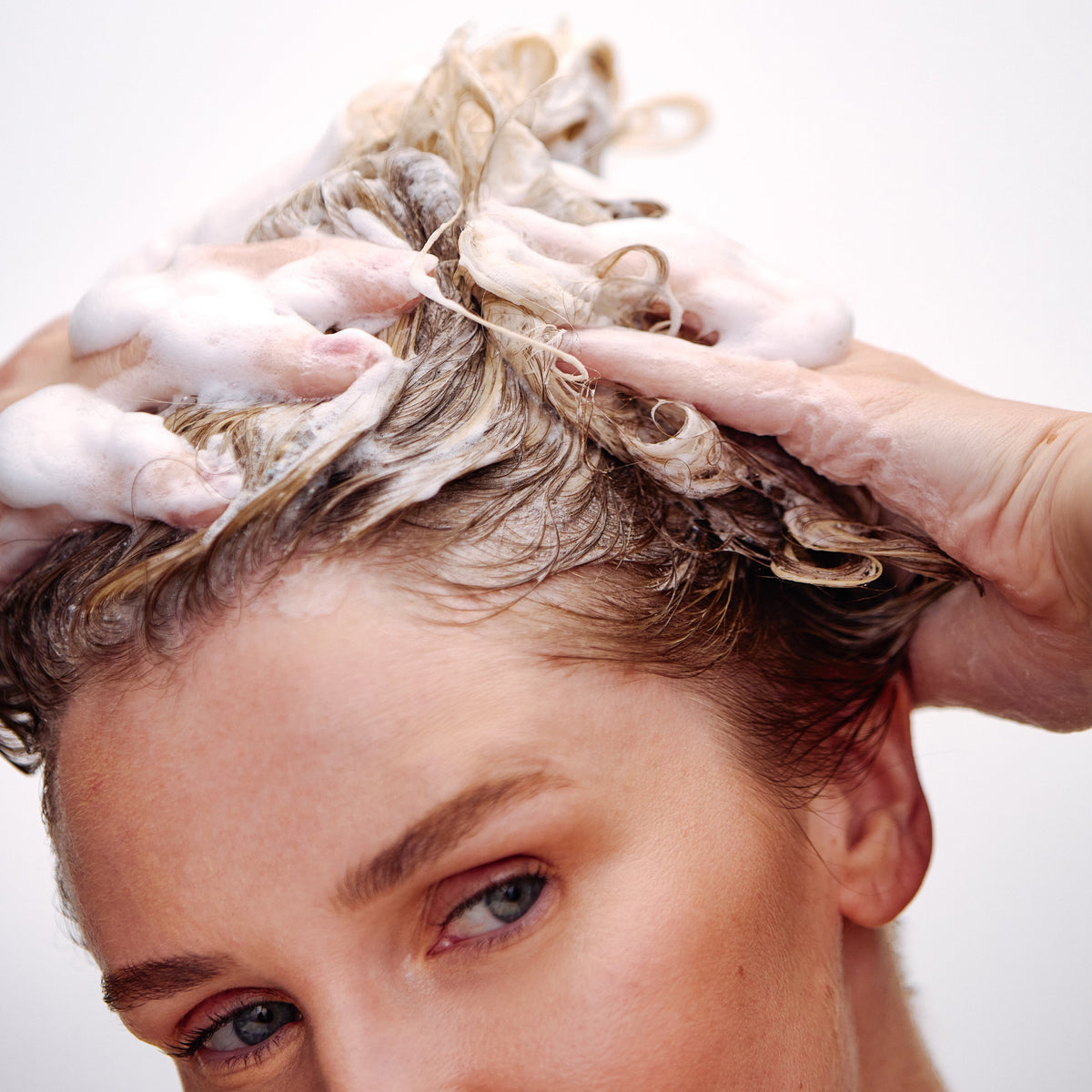
Seen scalp massage recommended everywhere and wondering whether it works? Dr. Park goes through evidence found by the studies, and explains how to massage your scalp without breaking hair in the pr...