


Iron Deficiency Hair Loss: What Your Ferritin Number Actually Means
Iron Deficiency and Hair Shedding
Iron deficiency is one of the most common causes of diffuse hair shedding in women, and ferritin is the blood test that finds it. Ferritin measures your stored iron, and it drops long before a standard anemia panel goes abnormal. That is why you can be told your bloodwork is normal and still be shedding from low iron.
By Dr. Joyce Park, MD, Board-Certified Dermatologist and Founder of Kerativ
What Does Iron Deficiency Hair Loss Look Like?
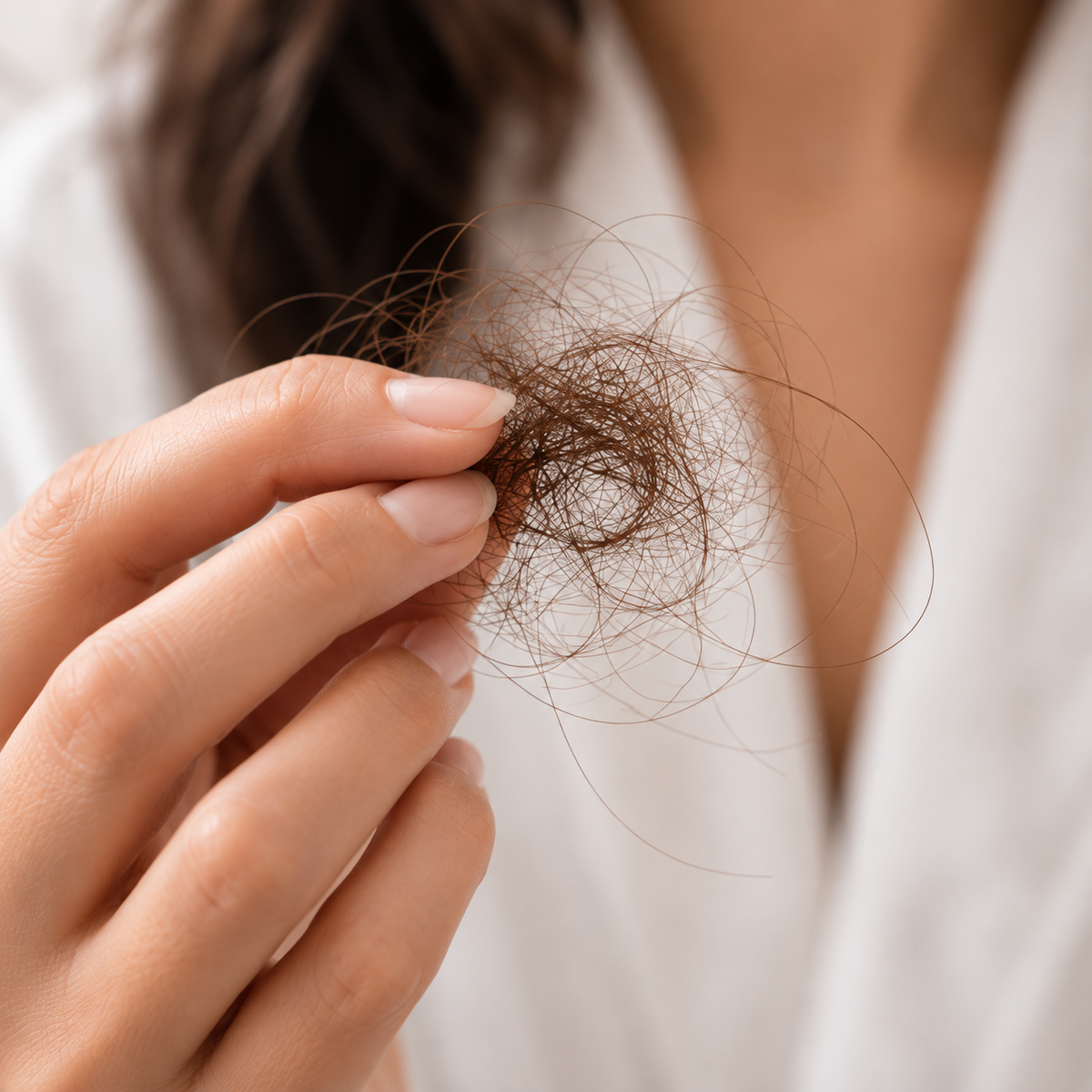
She was 34 and had been finding hair on everything. The bathroom floor, the back of her sweaters, a visible drift of it on the passenger seat of her car. Two things had changed in the past year. Her periods had gotten noticeably heavier, and she had stopped eating meat around the same time. Her primary care doctor had run a blood panel and told her everything came back normal, so she had spent four months assuming it was stress.
Her hemoglobin was, in fact, normal. Her ferritin was 18. Ferritin is the protein your body stores iron in, and it is the first thing to fall when your intake stops keeping up with your losses, months before the hemoglobin on a standard anemia panel drops far enough to flag. She was not anemic. She was iron deficient, which is a different thing, and it is far more common than most women realize: in high-income countries roughly 38% of nonpregnant women of reproductive age have iron deficiency without anemia, against about 13% who have iron-deficiency anemia.
Why Does Low Iron Cause Hair to Shed?
Hair follicles are among the most metabolically demanding structures in your body. The way I explain it in clinic: the cells in the hair matrix divide faster than almost any other cell type you have, and that kind of output needs a steady iron supply to keep running. When stored iron runs low, your body makes a triage decision. Red blood cell production and oxygen delivery come first, because those keep you alive. Hair does not. So the follicle gets deprioritized, growth phases shorten, and a larger than usual group of follicles slips into the resting phase together. Two to three months later those hairs release, which is why the shedding usually starts well after the deficiency did.
Iron is not the only thing that produces this picture though. When a patient comes in with diffuse shedding, I check thyroid function, ask about any illness or surgery in the previous six months, review new medications, and take a careful history around pregnancy and delivery. Heavy shedding that turns out to be telogen effluvium and the seasonal shed that peaks in late summer and fall can look nearly identical from the outside. The point of the bloodwork is to find the causes that are correctable, and iron is the most correctable of all of them.
What Ferritin Level Is Too Low for Hair?
Ferritin thresholds from the American Society of Hematology 2026 iron deficiency guidelines, with the shedding association from Beatrix et al.
The number that matters for hair sits higher than the number your lab flags.
A typical lab report will not mark ferritin as low until it falls under roughly 10 to 15 ng/mL. The 2026 American Society of Hematology guidelines diagnose iron deficiency at a ferritin of 30 ng/mL or below in adults, and at 50 ng/mL or below in people with heavy menstrual bleeding, or in pregnancy with anemia. But hair shedding shows up earlier than any of that. In one study of 554 non-anemic menstruating women, recent hair loss was significantly more common in the women whose ferritin sat at or below 20 µg/L. Those units are interchangeable, so 20 µg/L and 20 ng/mL are the same number.
In my own practice, when a patient is actively shedding, I am not satisfied until her ferritin is above 50. That number is not arbitrary. It is the same threshold the ASH guidelines use to diagnose iron deficiency in people with heavy periods, which is the group most of my shedding patients belong to. I still want to be clear that it is a clinical target rather than a trial-proven one. No randomized study has established a ferritin number that hair recovery requires, and dermatologists who use higher targets are working from experience and consensus rather than from outcome data. That being said, it is the number I actually use, and I would rather tell you that than a safer one I do not.
One more thing worth knowing about ferritin. It is an acute-phase reactant, which means inflammation drives it up. If you have an infection, an autoimmune condition, or anything else inflammatory going on, your ferritin can read normal or even high while your actual iron stores are low. In that situation, ask for a transferrin saturation as well, which is a different way of measuring the same problem and is not fooled by inflammation in the same way.
Iron Deficiency Shedding vs. Telogen Effluvium and Female Pattern Thinning
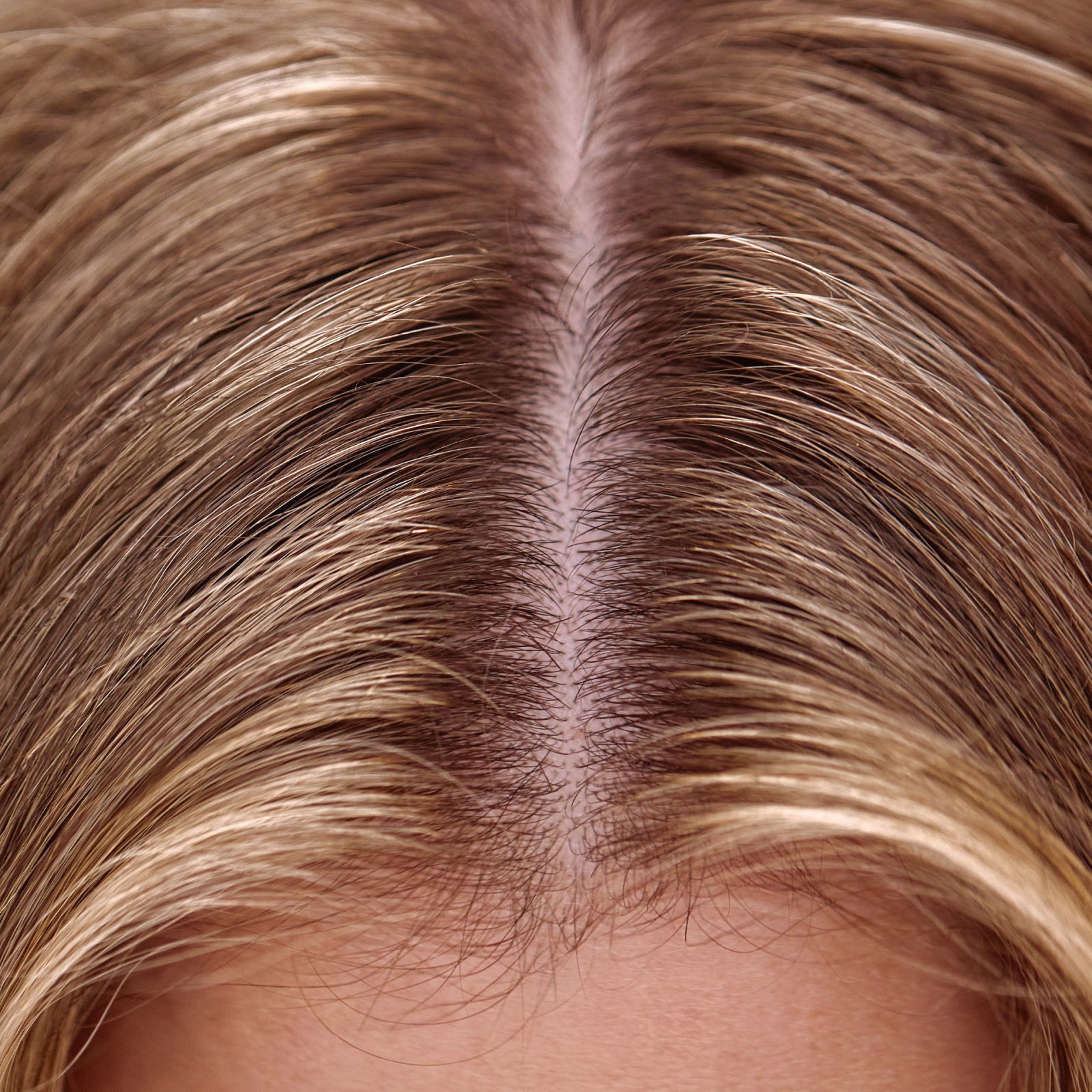
- Iron deficiency shedding is diffuse, spread evenly across the whole scalp rather than concentrated at the part line or crown.
- It builds gradually over months rather than arriving as one dramatic wave 2 to 4 months after a single stressor.
- It tends to continue rather than peak and resolve, because the cause is still present until the iron is corrected.
- Heavier or longer periods, a recent pregnancy, or a diet low in heme iron are the usual histories sitting behind it.
- Other iron deficiency symptoms often appear alongside it, including fatigue, difficulty concentrating, restless legs at night, and feeling short of breath on stairs.
- Female pattern thinning, which shows up at the part line rather than all over, widens the part while preserving the frontal hairline, and it thins rather than sheds.
- Telogen effluvium has a clear trigger 2 to 4 months earlier, peaks, then slows on its own once that trigger has resolved.
- Iron deficiency can sit on top of either of the other two, which is why a scalp that looks entirely normal still deserves bloodwork.
What I Tell My Patients
No topical product fixes a nutrient deficiency, so the first move here is a blood panel and not a serum. If you do need iron, ask your physician about alternate day dosing, because taking it every other day actually improves how much of each dose you absorb. And do not panic when your stool turns black, because that is expected and it is not a sign that anything is wrong.
 Dr. Joyce Park Dermatologist & Founder of Kerativ
What Actually Helps While Your Iron Recovers
Correcting iron takes months, and your hair will lag behind your labs. Your ferritin can be back where you want it while the shedding is still settling, because follicles have to finish the cycle they are already in before new growth comes through. That gap is the part patients find hardest, and it is where scalp care earns its place. It is not fixing the deficiency, but rather making sure that when the follicles do come back, they come back into a scalp that is in good condition.

The Serum
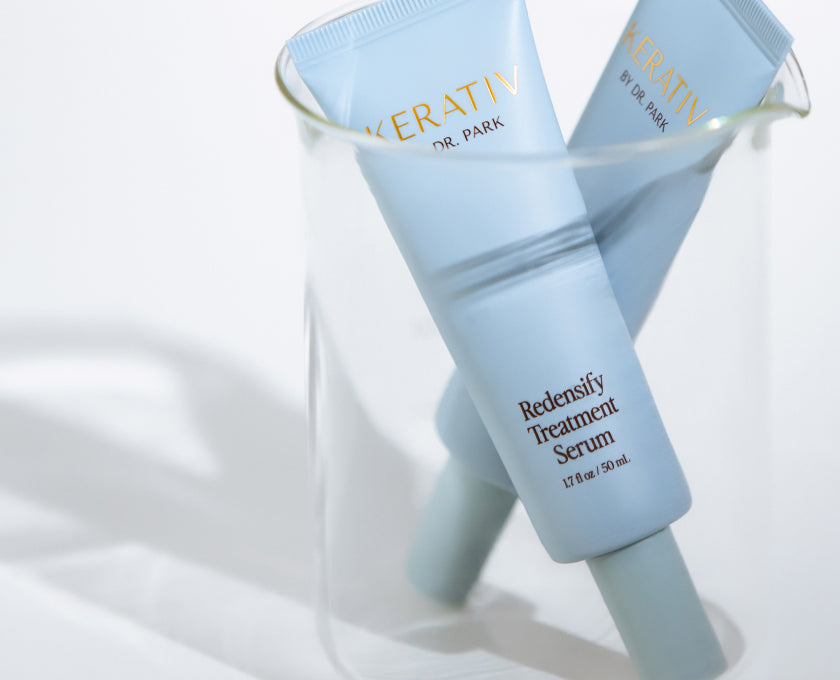
Redensify Treatment Serum
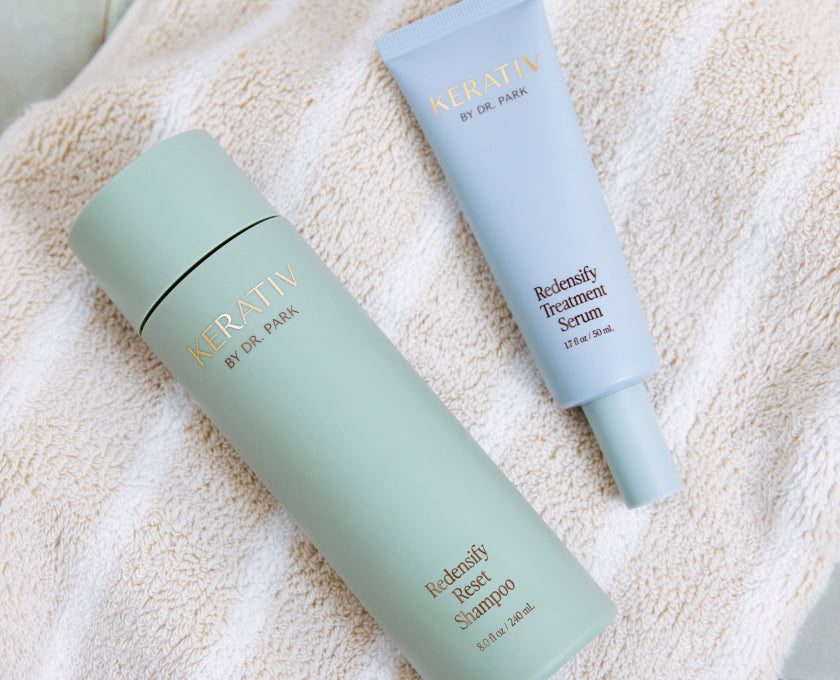
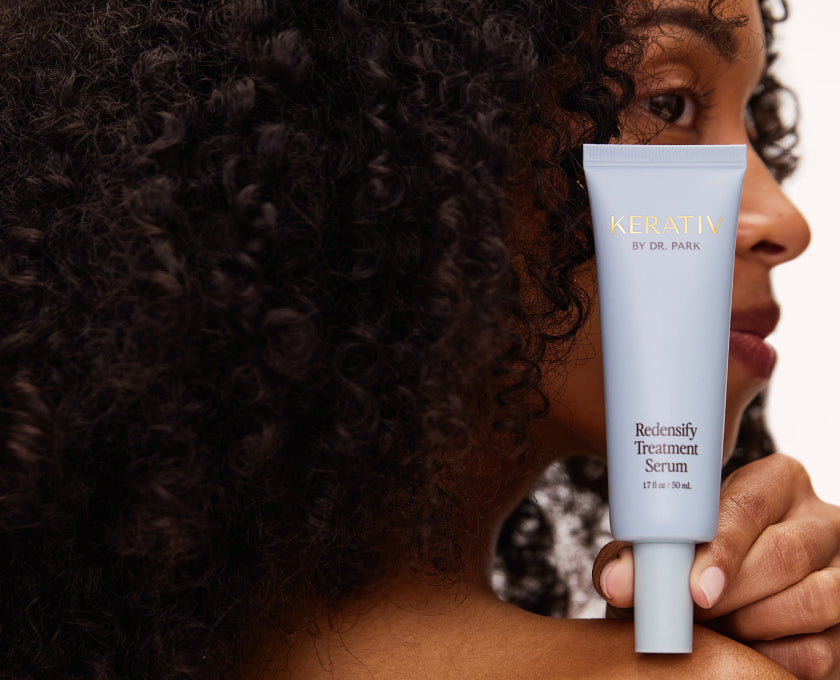
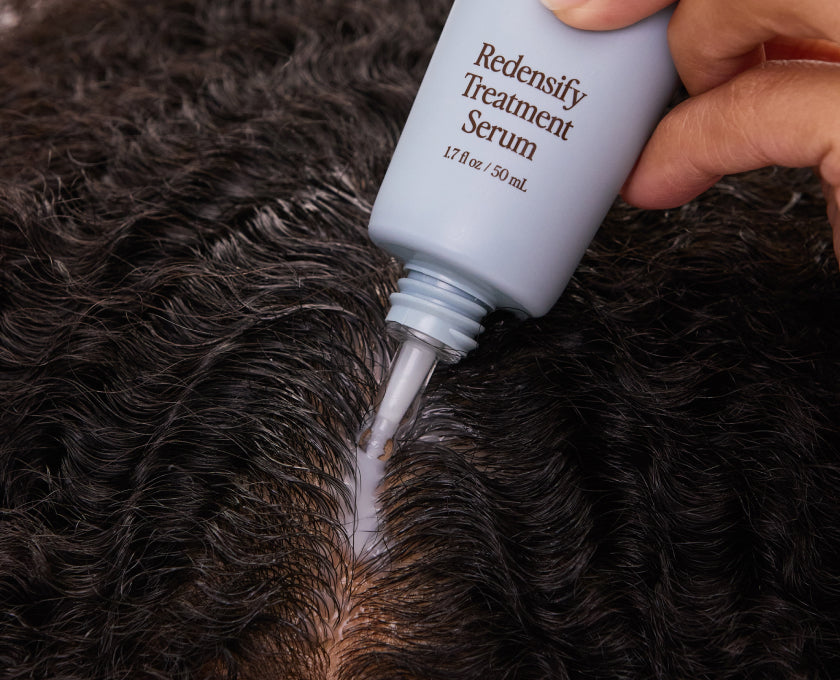
The Redensify Treatment Serum is a dermatologist-developed, fragrance-free scalp serum that nourishes the scalp and follicles to support fuller, denser, healthier-looking hair. I formulated it to be sectioned onto a dry or damp scalp with the needle-nose tip, massaged in with your fingertips, and left on. In an independent 24-week clinical study of the Kerativ Redensify Treatment Serum, hair density and volume improved at 3 months, and thickness at 6.*

The Shampoo
Redensify Reset Shampoo
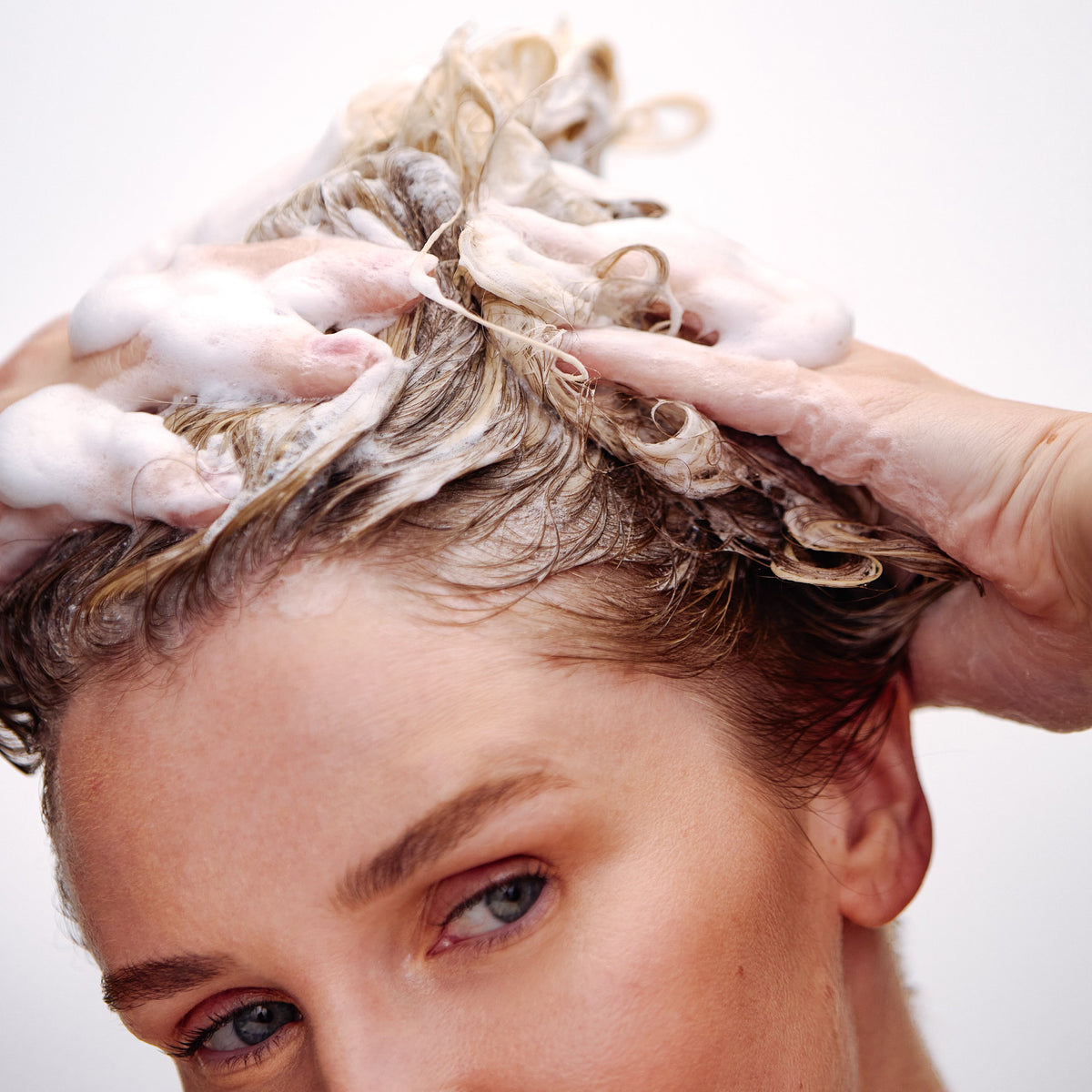
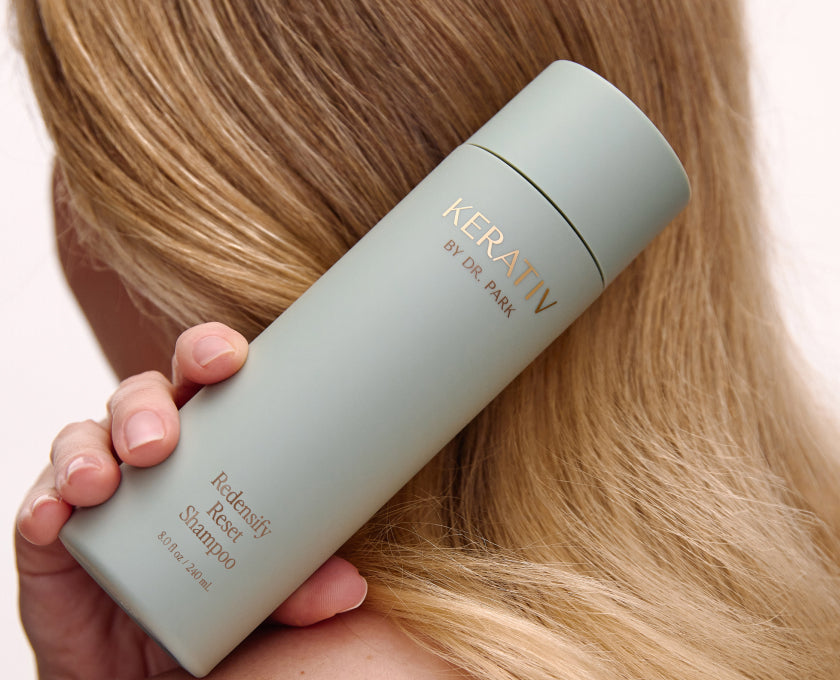
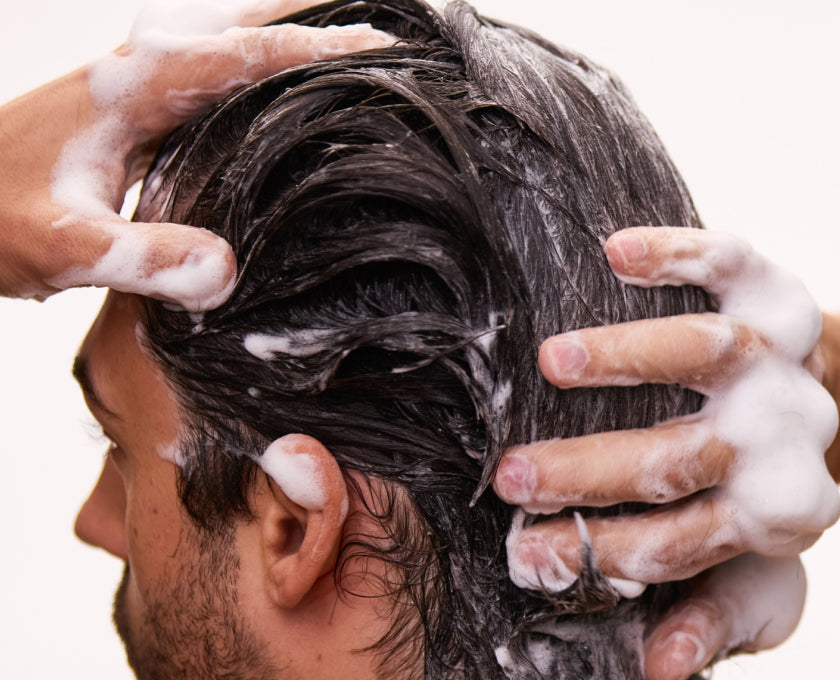
The Redensify Reset Shampoo is a dermatologist-developed sulfate-free gel shampoo that gently cleanses the scalp and hair while adding lightweight volume to fine strands. During a shedding phase, hair is fragile and gentle cleansing matters more than usual. Massage a quarter-size amount onto a wet scalp, leave it on for a few minutes, then rinse.

The Regimen
Redensify Regimen
The Redensify Regimen is the two together at a bundled price, which is the simplest way to start a consistent routine while your iron recovers.
Why Scalp-First Care Matters Here
It supports the scalp, but it does not correct the deficiency. I want to be direct about this, because it is the whole honest limit of the category. Iron deficiency gets corrected with iron. What a scalp routine does is make sure the environment your follicles return to is a good one.
Gentle cleansing while hair is fragile. The sulfate-free Reset Shampoo removes buildup and calms the scalp without stripping, which matters more during a shedding phase than at any other time.
A twice-daily habit matches the recovery timeline. Iron repletion and hair recovery both run in months rather than weeks. A routine you can actually keep for that long is worth more than an intensive one you abandon.
Dermatologist-developed and suitable for all hair and scalp types. Sulfate-free, color safe, vegan and cruelty-free.
Cosmetic products are not drugs and are not intended to diagnose, treat, cure, or prevent any disease. Ask your physician or OB-GYN for a ferritin level rather than starting iron on your own, because iron is not easily cleared once stores are full.
*Based on a 24-week clinical study with 32 participants, dermatologist-evaluated. Results may vary.
Frequently Asked Questions
Can you have low iron without being anemic?
Yes, and this is the single most common misunderstanding I correct in clinic, because a standard complete blood count measures hemoglobin rather than iron stores, and hemoglobin is the last thing to fall. Iron deficiency without anemia is extremely common in menstruating women, and if nobody has ordered a ferritin then nobody has actually checked your iron. Ask for the ferritin value itself rather than whether it was flagged as low, because the flag and the number that matters for hair are not the same threshold.
How long does it take for hair to stop shedding after you start iron?
Plan on 3 to 6 months before the shedding meaningfully settles and closer to 6 to 12 months before your density looks like itself again, because your ferritin recovers well ahead of your hair and the follicles already sitting in the resting phase still have to finish that cycle before anything new comes through. I advise rechecking ferritin around 3 months after starting supplementation so that you know whether the dose is actually working rather than assuming it is, since absorption varies a lot between people.
Should I just start taking an iron supplement?
I would not, and this is one of the few places where I am firm about testing first, because iron is one of the few nutrients your body has no efficient way to get rid of, and supplementing without a documented deficiency can push your stores too high over time. Also, being iron deficient is a finding, not just a number to fix, and occasionally the reason behind it is something that needs looking into on its own. Get the ferritin, then supplement with a target to aim at.
Does taking iron help if my ferritin is normal?
If your ferritin is genuinely normal then adding iron is not going to do anything for your hair, and I would rather you put that effort into finding the actual cause! The one caveat is that normal can be misleading, because ferritin rises with inflammation, so a normal value in someone with an inflammatory condition does not rule out a deficiency, and a transferrin saturation under 20% will often reveal it when the ferritin does not.
How long before I see a difference from a scalp serum?
You will typically start seeing fuller-looking hair around the 3-month mark with consistent twice-daily use. In the first few weeks your scalp begins to rebalance, and some people notice a brief increase in shedding as follicles shift into a healthier cycle, which is normal and temporary. Around 3 months hair starts to look fuller and denser with less noticeable thinning, and thickness takes longer, which is why I recommend committing to at least 6 months. If you are correcting iron at the same time, remember that you are running two timelines at once, and the deficiency is the one that has to resolve first.
What to Read Next
If your shedding arrived as one heavy wave a few months after an illness, a surgery or a hard stretch, heavy shedding that turns out to be telogen effluvium covers that picture in full. If your part is widening rather than your whole scalp shedding, the why behind female pattern thinning is the place to start. And once your iron is on its way back up, a dermatologist's step by step routine for thinning hair turns the scalp side into a routine you can keep.