

Hair Loss in Women Over 40: Why It Gets Missed, and How to Get Real Help
Midlife Hair Health
Hair Loss in Women Over 40: Why It Gets Missed, and How to Get Real Help
Hair loss in women over 40 is common and often overlooked. In a study of 178 women aged 50 to 65, 52% had female pattern hair loss, yet midlife thinning is frequently written off as stress or aging. It can also come from iron deficiency, thyroid disease, medications or a scarring condition, so new thinning deserves a dermatologist's evaluation.
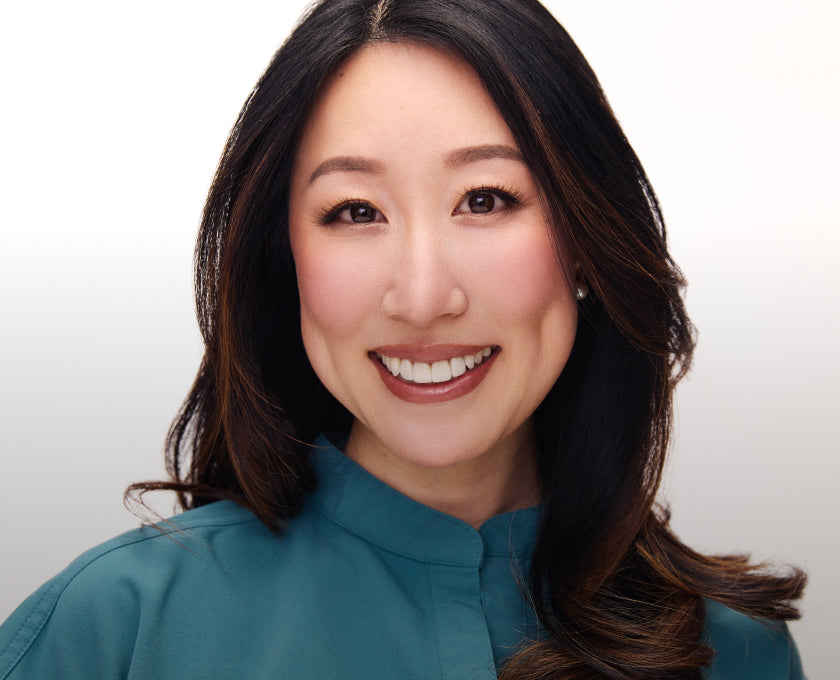
By Dr. Joyce Park, MD, Board-Certified Dermatologist and Founder of Kerativ
Every October, Menopause Awareness Month sets aside time to talk openly about the menopause transition and the care women deserve through it. I want to add one symptom to that conversation, because it so rarely comes up: hair.
A patient of mine came in at 47. Her periods had become heavier and less predictable over the past year, she was experiencing hot flashes and night sweats, she was finding more hair in the shower, and her part looked wider in photos. She had been told it was just menopause. She was, in fact, not imagining any of it, and it was not just one thing: her ferritin was low, and her scalp showed early female pattern hair loss.
Hair loss in women over 40 is common, but common does not mean it should be dismissed. It is often more than one process at once, several of the causes are correctable, and the first step is simply having someone look closely. That starts with understanding why it gets overlooked.
Why Is Hair Loss in Women Over 40 So Often Missed?
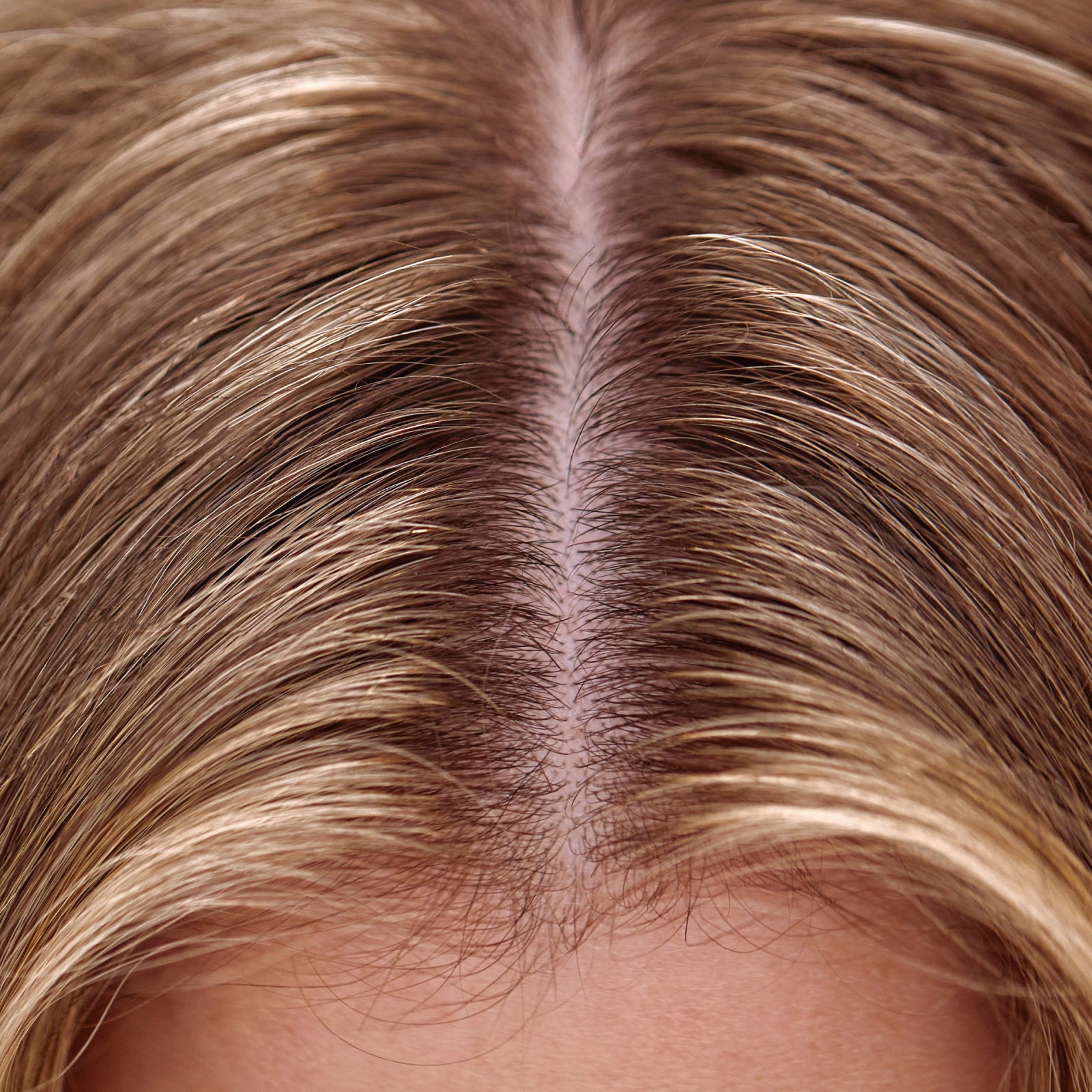
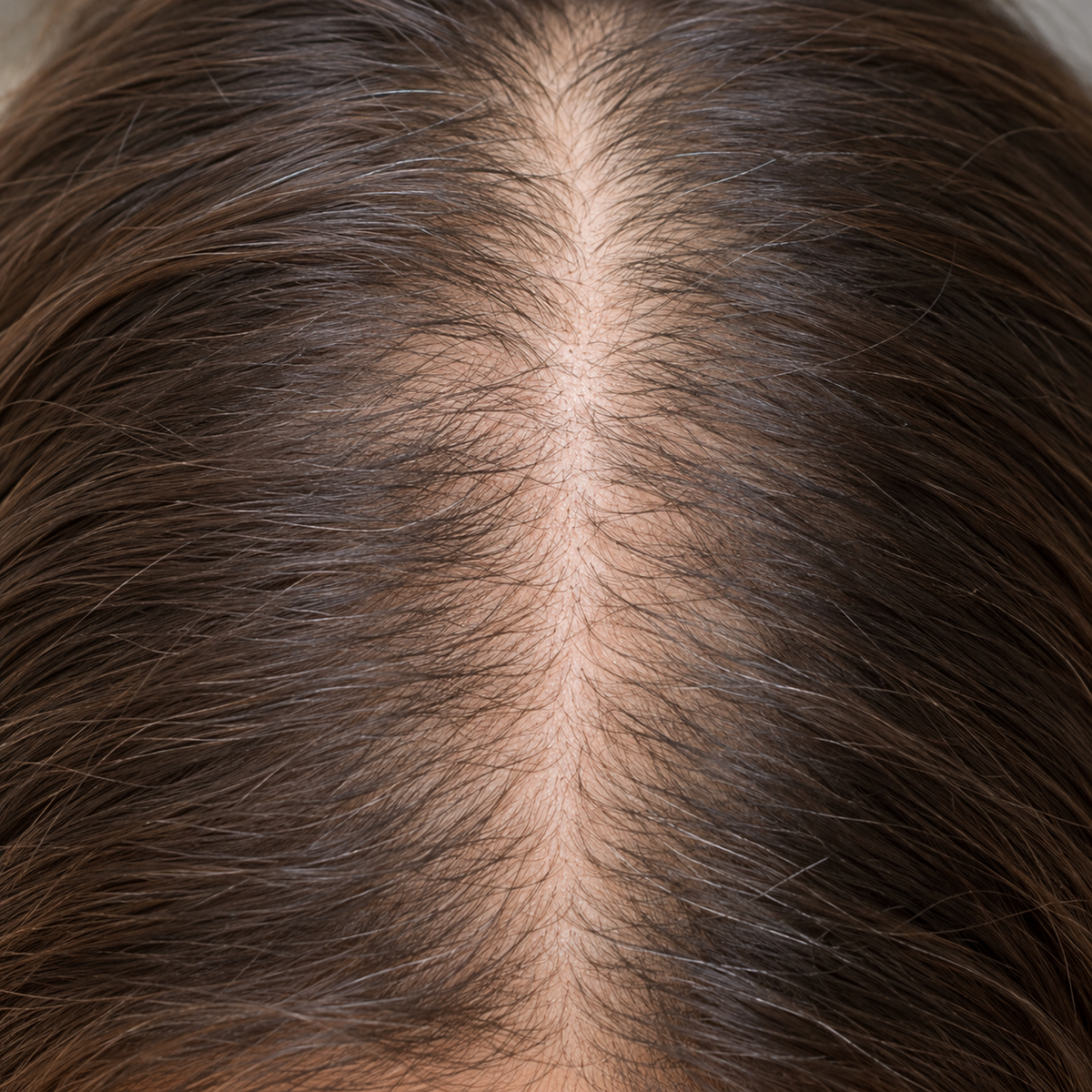
Hair loss in women over 40 gets missed because it arrives slowly, overlaps with everything else changing in midlife, and is rarely something anyone asks about. A wider part develops over months to years, so there is no single moment that feels like a problem. It is easy to put it down to stress, a busy year, or simply getting older.
It is also far from rare. In one study of 178 postmenopausal women aged 50 to 65, 52% had female pattern hair loss, and the likelihood rose with age and with time since menopause. The authors concluded that hair loss deserves more attention in menopause clinics. I strongly agree.
Part of the reason is hormonal. As estrogen falls, follicles lose some of their protection against androgens (hormones such as testosterone), and I walk through that process in detail in how falling estrogen changes the hair follicle. Hormonal hair loss is only part of the picture, however, and thinning hair in women at this stage of life deserves a proper look rather than a shrug.

What Else Causes Hair Loss During Perimenopause and Menopause?
Most hair thinning in women over 40 is female pattern hair loss, but several other causes can look similar at first, and some of them are very correctable. In clinic, I often find more than one at the same time. This is how I sort them.
| Cause | What you might notice | What a clinician may check |
|---|---|---|
| Female pattern hair loss | A wider part and thinning at the crown, with the front hairline kept | A scalp exam, often with dermoscopy (a magnified view of the follicles) |
| Stress-related shedding, called telogen effluvium | More hair falling out all over, about 2 to 4 months after an illness, surgery or major stress | Your recent history, and a pull test (gently tugging a small section to see how many hairs release) |
| Iron deficiency | Shedding all over, often alongside heavier or more frequent periods | Ferritin, the blood test for your iron stores |
| Thyroid disease | Thinning all over, sometimes with fatigue, weight change, or feeling unusually cold or warm | TSH, a thyroid blood test |
| Medication-associated shedding | Shedding a few months after starting or changing a medication, including GLP-1 medications | Your medication history |
| Frontal fibrosing alopecia | A hairline that is moving back, or eyebrows that are thinning | A scalp exam, sometimes a small biopsy |
Iron deserves its own mention, because perimenopause often brings heavier periods. The American Society of Hematology's 2026 guidelines diagnose iron deficiency at a ferritin of 50 ng/mL or below in people with heavy menstrual bleeding.
That is also where I aim: while a patient is actively shedding, I like to see ferritin above 50 ng/mL. No trial has defined an exact number that hair recovery requires, but my target matches the threshold hematologists use for women with heavy periods, which describes many of the women I see for shedding. And if your ferritin is low, your physician can guide how to replace it.
Also, if your shedding picked up only in the past few weeks, keep in mind that many people shed more every autumn, which I explain in the normal shed many people notice in the fall. A seasonal shed usually settles on its own; a wider part does not.
As a dermatologist, I want to highlight this point: a hairline that is moving back, or eyebrows that are thinning, is not typical menopausal thinning. Frontal fibrosing alopecia is an inflammatory condition that mainly affects women after menopause, typically around age 60, and eyebrow thinning can appear before any change at the hairline. If you notice either, get it examined by a dermatologist.
What I Tell My Patients
Midlife hair loss is often two things at once, which is why I check labwork like ferritin and thyroid before I attribute thinning to hormones alone, and why I always look at the eyebrows. Getting older does not explain new shedding or a wider part on its own. If no one has examined your scalp yet, a board-certified dermatologist is the place to start.
 Dr. Joyce Park Dermatologist & Founder of Kerativ
How Can You Support Someone Through Midlife Hair Loss?
The most helpful thing you can do is take it seriously and help her get it evaluated, rather than reassuring her that it is just aging. Hair is closely tied to how many women see themselves, and in the same prevalence study, female pattern hair loss was associated with lower self-esteem.
If she mentions it, believe her, even if you cannot see a difference yet. She is looking at her part every morning, and you are not.
Offer to help her book the appointment, or to come along. And leave the jokes out of it; a woman who has started styling around a thin spot already knows it is there.
If you are the one going through it, you are allowed to raise it at a visit that was booked for something else, and you are allowed to ask for a referral.
How Do You Get Midlife Hair Loss Properly Evaluated?
The best route is a board-certified dermatologist to diagnose the type of hair loss, with your gynecologist or a menopause specialist involved for the hormonal side and any heavy bleeding, because the scalp exam is what tells these causes apart and the bloodwork fills in the rest.
Before the appointment, gather a few things. They make the visit far more productive.
- When you first noticed the change, and whether it was shedding, a wider part, or both
- Photos of your part or hairline from a year or two ago, if you have them
- Changes in your periods, including heavier or more frequent bleeding
- Every medication and supplement you take, and anything started or stopped in the past 6 months
- Any illness, surgery, major stress or significant weight change in the past year
- Family history of hair thinning, on either side
- Changes to your eyebrows, eyelashes or hairline
- Any recent bloodwork, especially ferritin, a complete blood count and thyroid tests
- Your current hair routine, including minoxidil or anything else you have tried
Depending on what the exam shows, your clinician may check ferritin and iron studies, a complete blood count and a thyroid test (TSH), a hormone panel, vitamin levels such as zinc and B12, and sometimes more.
Once the cause is clear, a consistent scalp-first routine is a reasonable companion to whatever your physicians recommend, and I walk through one in a scalp-first routine.
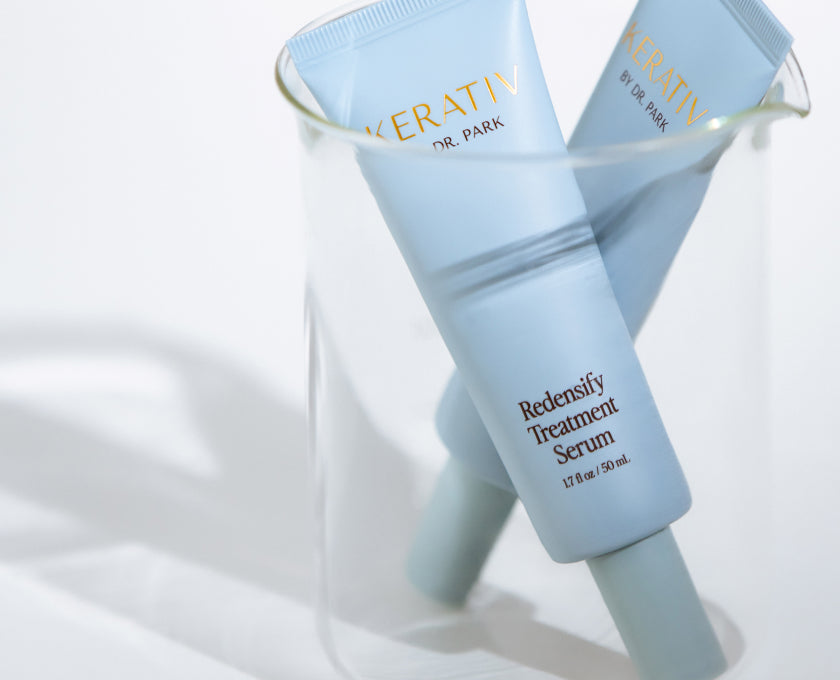
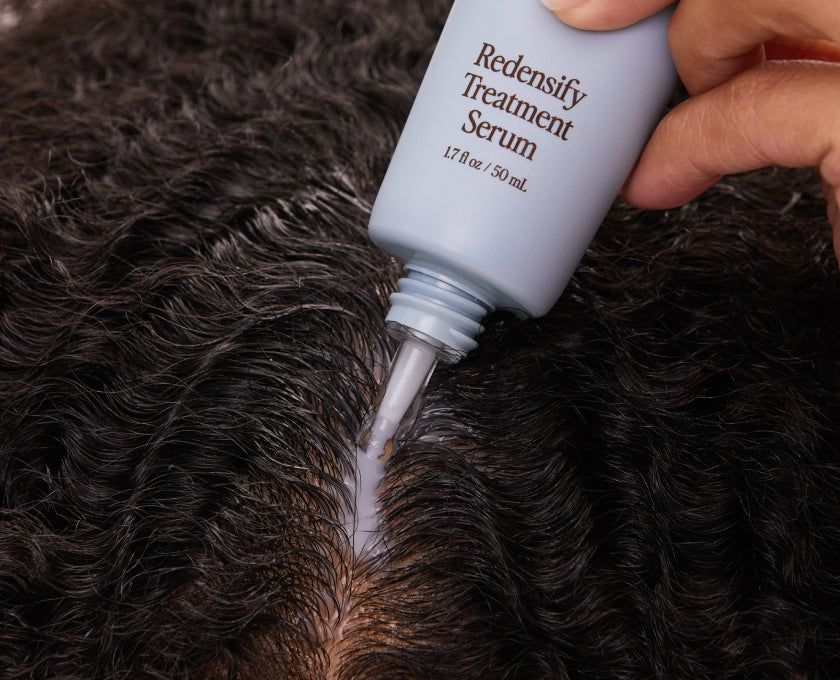
I formulated the Redensify Treatment Serum, a fragrance-free scalp serum, to nourish the scalp and follicles to support fuller, denser, healthier-looking hair. In our 24-week clinical study, the Redensify Treatment Serum was clinically shown to increase hair density and volume in 3 months, and thickness in 6.* That study enrolled adults aged 18 to 55 who were not using minoxidil, so it does not tell us how women over 55 respond.
The serum supports the scalp and the look of your hair, but it does not correct an iron deficiency or a thyroid problem, which is why the evaluation comes first. Hair changes slowly in both directions, so give any plan at least six months before you judge it. Consistency is key.
The Kerativ Redensify Regimen for Midlife Hair Thinning
I developed the Redensify Regimen specifically for thinning scalps. For women navigating the gradual changes of midlife hair loss, consistent scalp-first care creates the healthiest possible environment for follicles to function well.

Scalp-First Cleansing
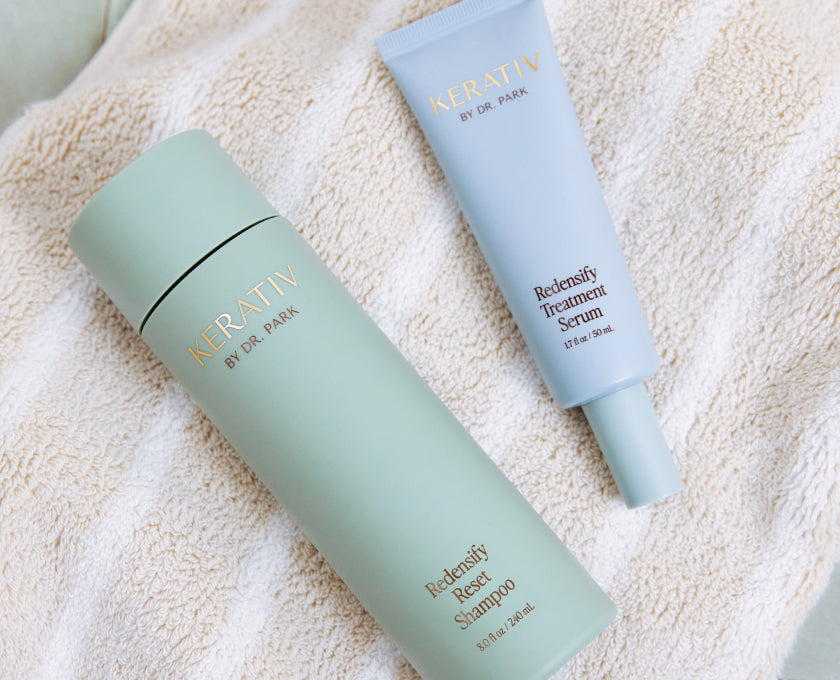
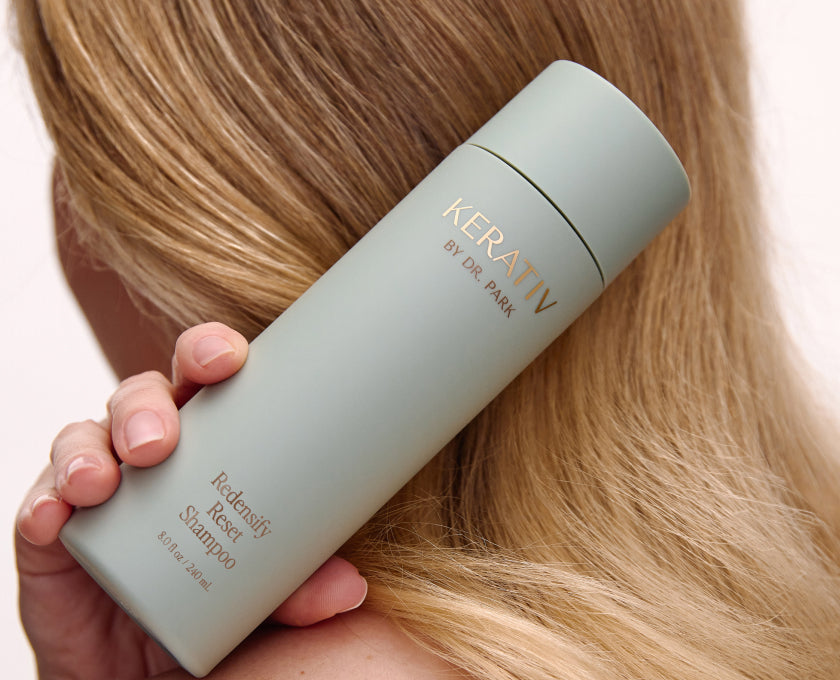
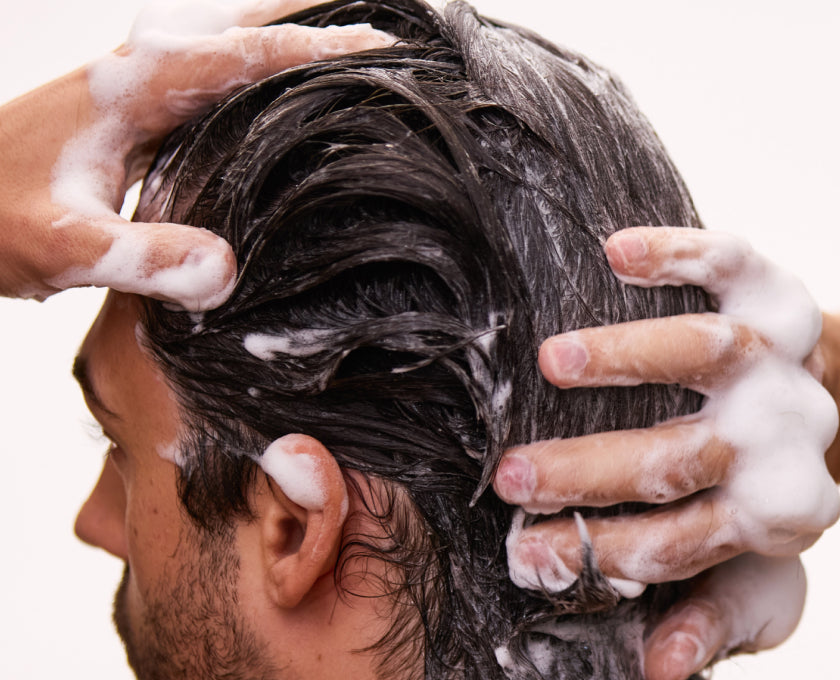
Redensify Reset Shampoo
A dermatologist-developed, sulfate-free volumizing gel shampoo that removes buildup and supports a healthier scalp environment. Lifts from root to tip for fuller, thicker-looking hair. Apply directly to the scalp, leave on for a few minutes, then rinse.

Twice-Daily Scalp Treatment
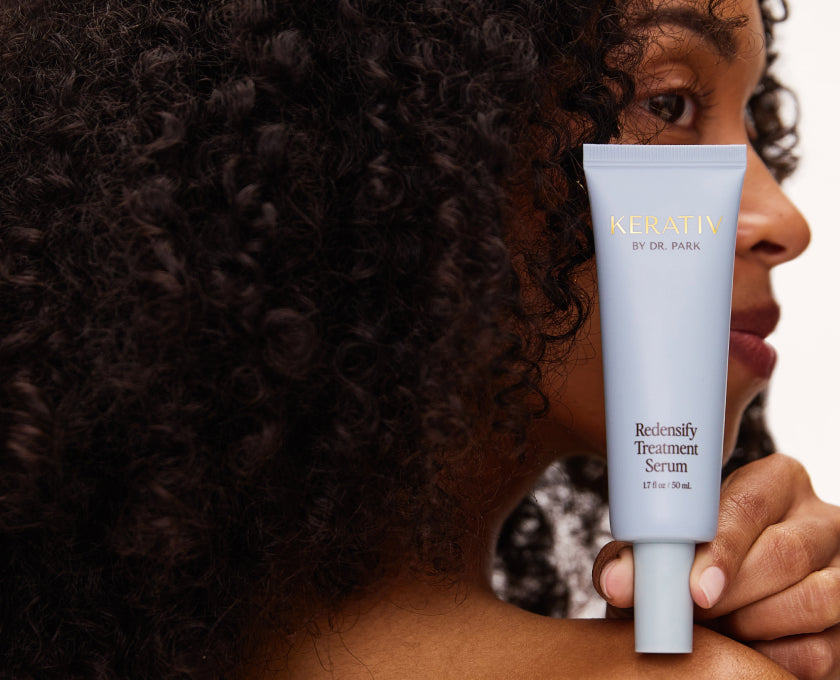
Redensify Treatment Serum
A dermatologist-developed, fragrance-free scalp serum that nourishes the scalp and follicles to support fuller, denser, healthier-looking hair. Apply twice daily to a dry scalp and leave in. Clinically shown to increase hair density and volume in 3 months, and thickness in 6.*

The Complete System
Redensify Regimen
The shampoo and serum together at a bundled price. The complete cleanse-and-treat system for women taking a proactive, dermatologist-guided approach to scalp health.
Why Scalp-First Care Matters Here
Clinically validated ingredients for follicle support
The Redensify Treatment Serum is formulated with clinically validated technologies including Redensyl, Kopexil, Saw palmetto, Adenosine, Pumpkin seed oil, Caffeine, and more, to help nourish follicles and support the appearance of fuller, denser hair.
A gentle retinoid for scalp cell renewal
Adapinoid, a third-generation retinoid in the serum, helps revitalize scalp skin and support healthy cell turnover, and it is better tolerated than retinol. Use sunscreen and take sun protective measures.
Formulated for all hair types and textures
Color safe and suitable for all hair and scalp types. Free of sulfates, alcohol, and parabens. Vegan and cruelty-free.
Built for a long-term routine
Midlife hair changes happen gradually, and so does improvement. A consistent twice-daily routine builds the habits that long-term scalp care requires, and is designed to complement any medical treatments your physicians recommend.
Cosmetic products are not drugs and are not intended to diagnose, treat, cure, or prevent any disease. For evaluation of hair loss during perimenopause and menopause, consult a board-certified dermatologist and your gynecologist or a menopause specialist. *Based on a 24-week clinical study with 32 participants, dermatologist-evaluated. Results may vary.
Frequently Asked Questions
Is it normal to lose hair in your 40s?
Some change in texture and fullness is common in your 40s, especially as perimenopause begins, but a part that is getting wider, shedding that has lasted more than a few months, or eyebrows that are thinning are worth having examined rather than assuming they simply come with age. I advise starting with a board-certified dermatologist, and if anything in your bloodwork or your periods points elsewhere, bringing your gynecologist or primary care physician into the plan so the underlying cause is addressed alongside your scalp.
Should I see a dermatologist or my gynecologist about hair loss?
Ideally both, because they answer different questions: a dermatologist diagnoses which type of hair loss you have through a scalp exam and, when needed, a small biopsy, while your gynecologist or a menopause specialist manages the hormonal side, including heavy bleeding and whether hormone therapy makes sense for you.
Can hair changes start before menopause?
Yes, they often begin during perimenopause, the years of shifting hormones and irregular periods before your final period, so many women notice thinning or shedding in their 40s, well before they would describe themselves as menopausal. That being said, hair changes alone do not tell you that you are in perimenopause, because iron deficiency, thyroid disease and stress can all look similar, which is why I would rather examine the scalp and check bloodwork than assume.
Why are my eyebrows thinning during menopause?
Thinning eyebrows in midlife can come from several things, including thyroid disease and years of overplucking, but it can also be an early sign of frontal fibrosing alopecia, a condition that mainly affects women after menopause and can show up in the brows before the hairline. I would always rather see you early than late, so if your brows are thinning without a clear reason, or your hairline seems to be moving back, get it examined by a dermatologist.
Do normal hormone levels rule out hormonal hair loss?
Usually not, because female pattern hair loss after menopause most often reflects how sensitive your follicles are to ordinary hormone levels rather than abnormal ones, so many women with very real thinning have bloodwork that looks unremarkable. That is why the diagnosis rests on a scalp exam rather than a lab result, and if your labs came back normal but your part is still getting wider, I advise asking for a dermatologist's evaluation rather than accepting that nothing can be done.
What to Read Next
If you want the full explanation of how estrogen and androgens shape the follicle, start with Hair Thinning During Perimenopause and Menopause. For a closer look at the most common pattern, read The Why Behind Female Pattern Thinning, and if your shedding picked up in the past few weeks, Why Does Hair Shed More in Late Summer and Fall? explains what is normal for the season.
Read more
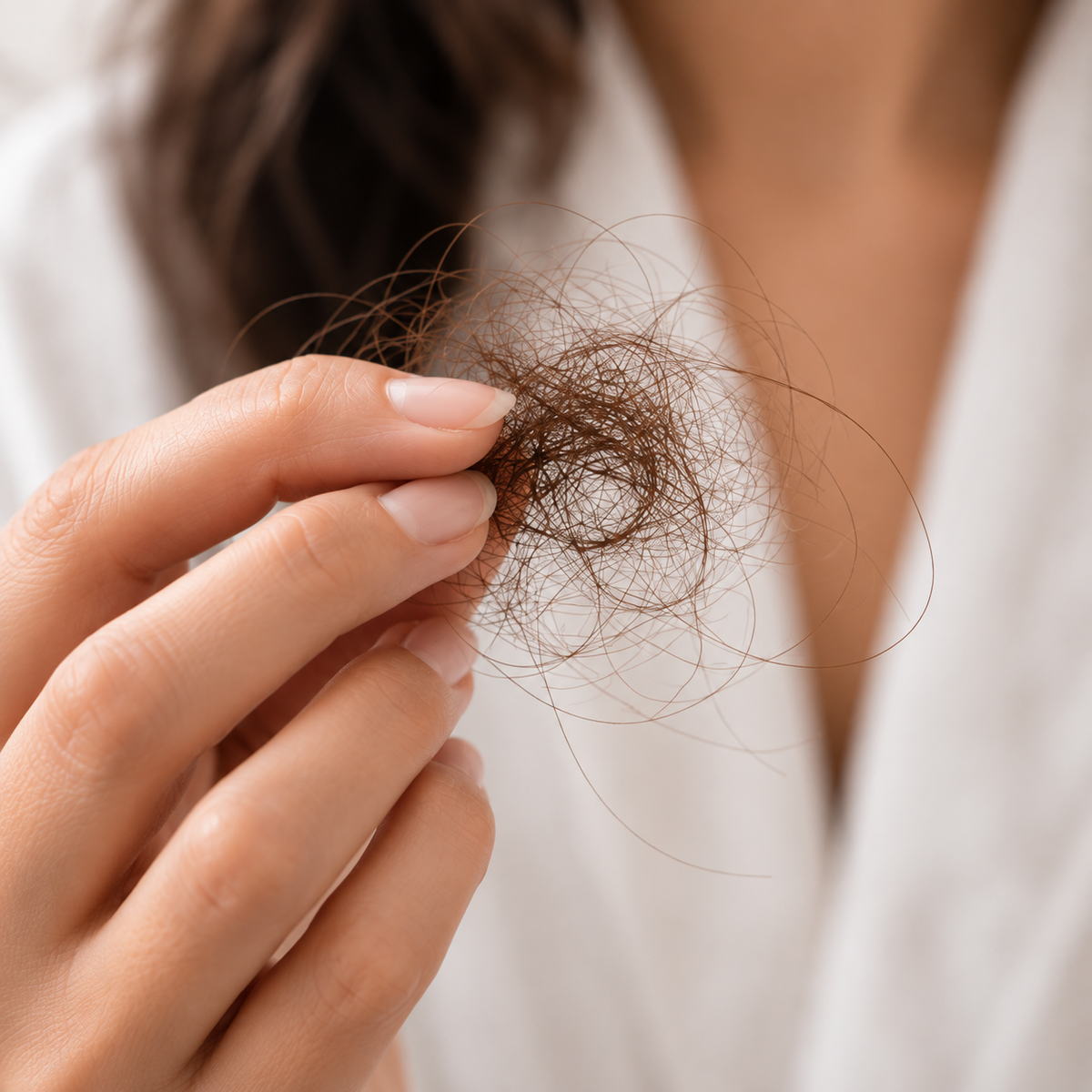
Told your bloodwork was normal but still shedding? Ferritin measures your stored iron, and it falls long before a standard anemia panel goes abnormal. Dr. Park explains what number to ask for, and ...
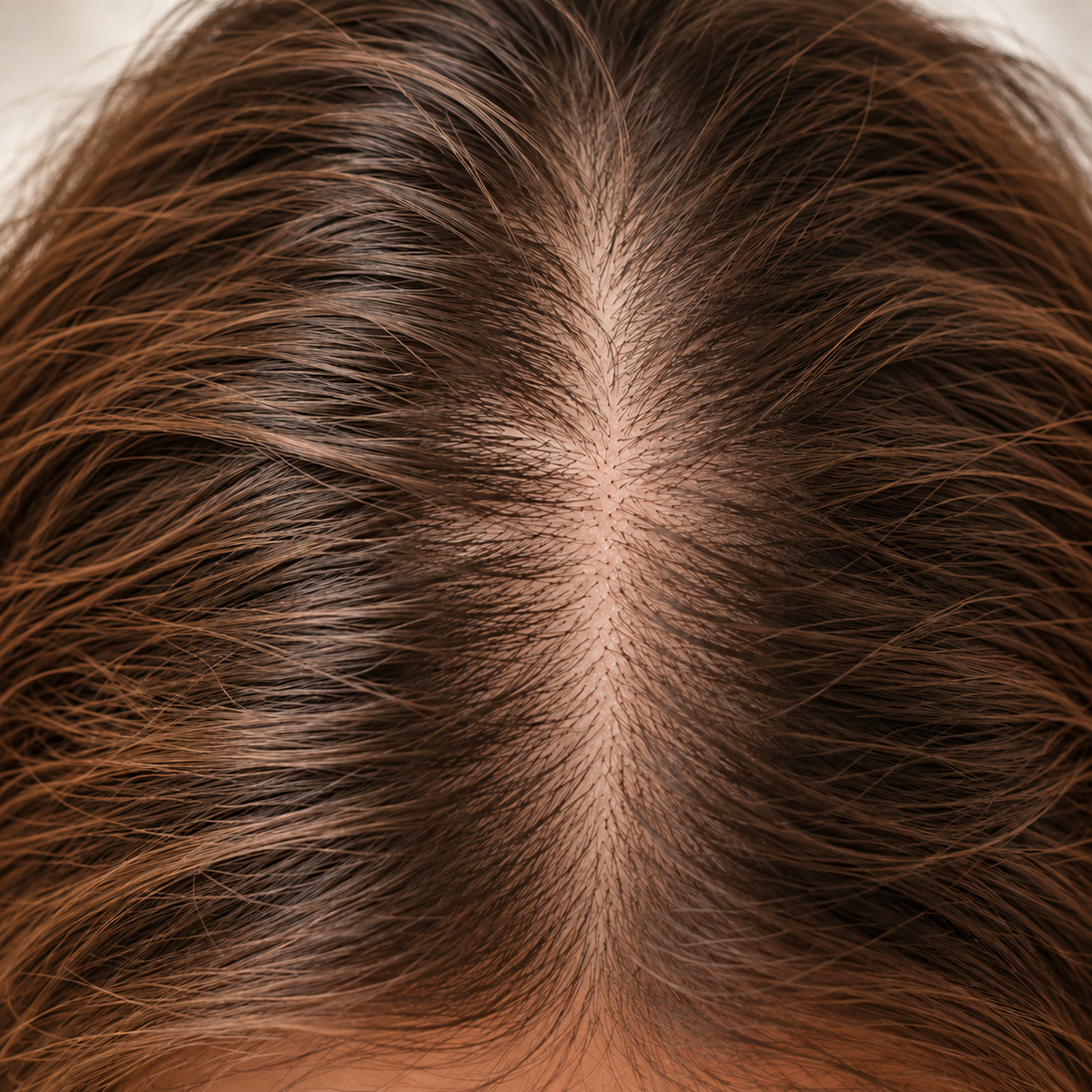
Diagnosed with PCOS and watching your part get wider? Scalp thinning is a real feature of PCOS, and it is less common than the facial and body hair most people associate with it. Dr. Park explains ...