


Stress Hair Loss: Why It Happens and When It Grows Back
Stress Hair Loss
Yes, stress can cause hair loss. The most common form is telogen effluvium: a major stressor pushes many growing hairs into the resting phase, and they shed together 2 to 4 months later. It usually stops on its own and the hair grows back. Sudden round patches, or shedding past 6 months, are reasons to see a dermatologist.
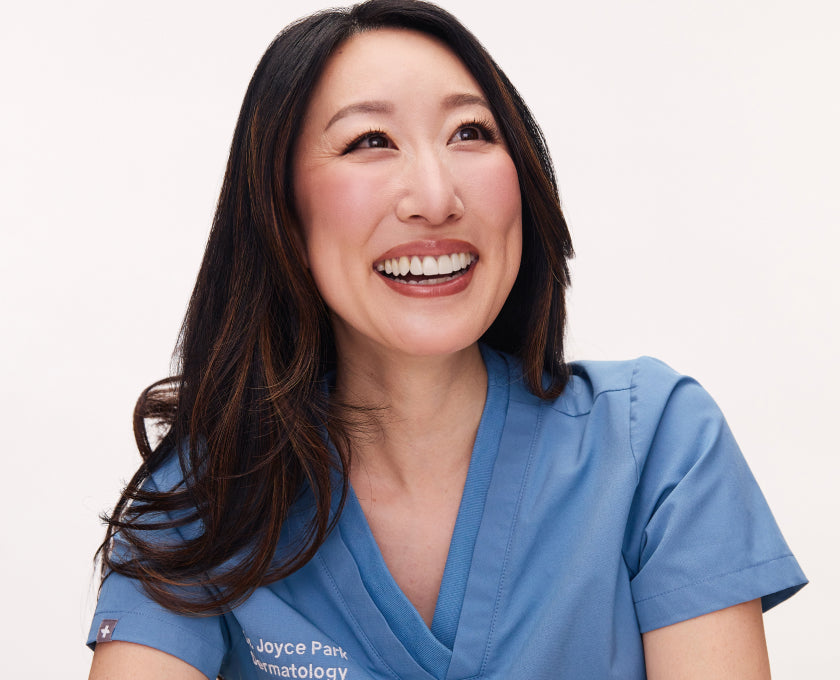
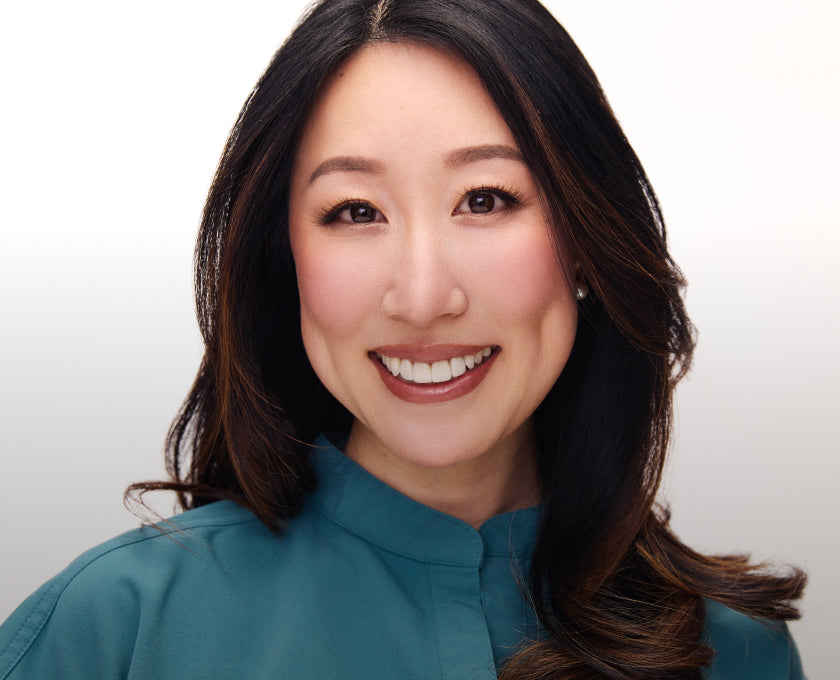
By Dr. Joyce Park, MD, Board-Certified Dermatologist and Founder of Kerativ
What Is Stress Hair Loss?
A patient of mine came in at 31, a few weeks before Thanksgiving. She had planned her own wedding over the summer, honeymooned in August, and by late October her shower drain was catching more hair every morning. Her wedding photos, she told me, looked fuller than her hair did now. She held up her phone and asked, "Is the stress of losing my hair going to make me lose even more?"
Not in the way she feared. Her follicles were healthy, and this shed was the delayed result of a summer that was already over. What she had was stress hair loss, most often a form of shedding called telogen effluvium. For context, losing about 50 to 100 hairs a day is normal; what she was seeing was well beyond her own normal, and it had a clear cause.
How Does Stress Cause Hair Loss?
The way I explain it in clinic: your hair grows in cycles, and at any given time most of your follicles are in the growing phase (anagen), with a smaller share resting (telogen) before they shed and start again. A major stressor, whether emotional, like a wedding, a move or a loss, or physical, like an illness, surgery or a high fever, can push many growing follicles into the resting phase at the same time. Nothing looks different at first. Then, 2 to 4 months later, those resting hairs all reach the end of the cycle together and fall out, which is why the shed so often arrives just when the stressful stretch finally feels behind you. Interestingly, a 2021 study in mice showed one way this can happen: chronic stress raised corticosterone, the rodent version of cortisol, and that hormone kept hair follicles in an extended resting phase by switching off a growth signal from the base of the follicle. It is data from a mouse study, not a human study.
That also answers her question honestly. The shed she was seeing came from the summer, not from her worrying about it. The American Academy of Dermatology does note, however, that people who stay under constant stress can have shedding that lasts longer, which is why taking care of yourself while it settles genuinely matters.
Stress is also rarely the whole story, so before I attribute shedding to stress alone, I rule out the things that can start it or keep it going. That means checking ferritin, because low iron stores can sustain shedding on their own, along with a thyroid test, and asking about recent illness, new medications and rapid weight loss, including from GLP-1 medications.
What Does Stress Hair Loss Look Like?
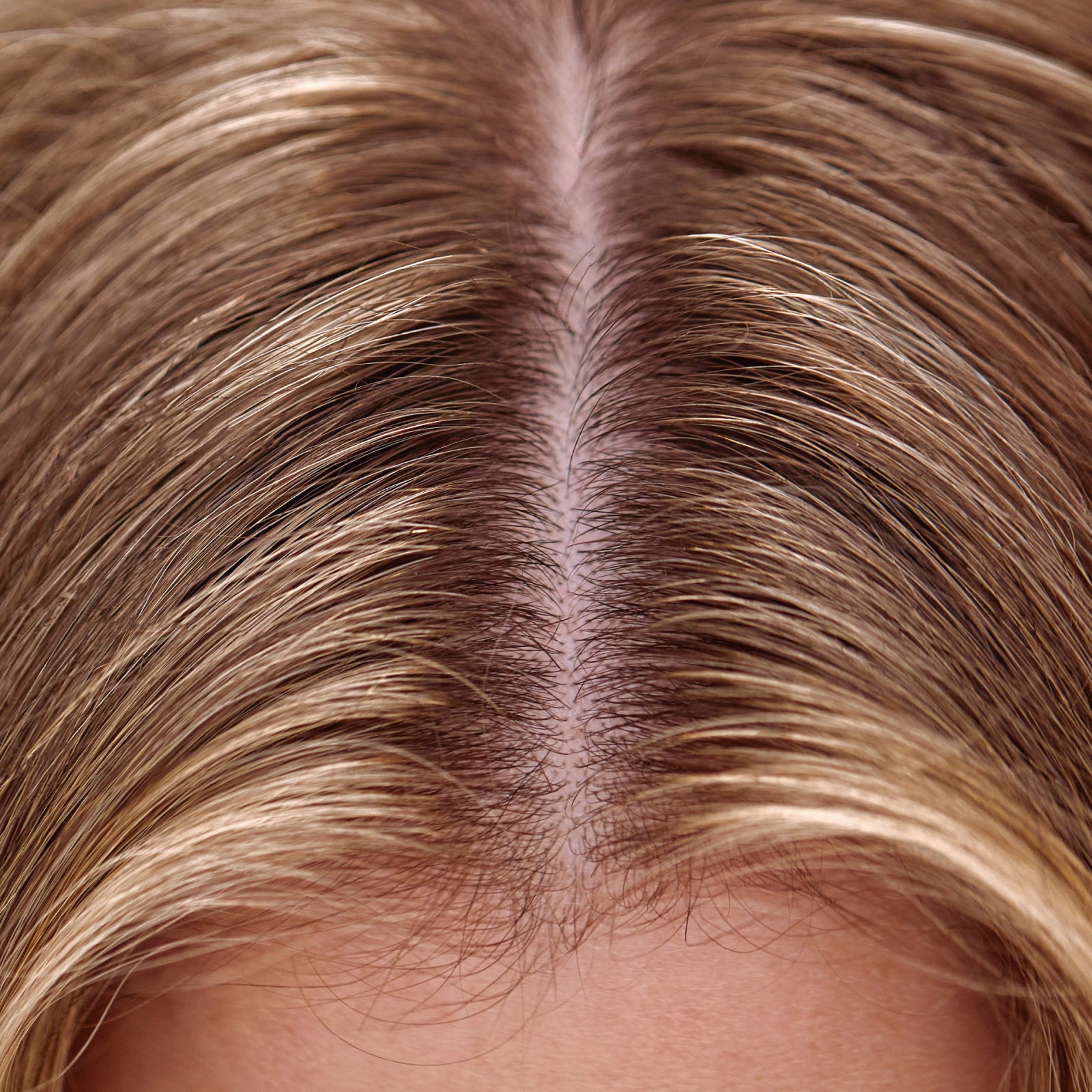
- The shedding is diffuse, spread across the whole scalp, rather than concentrated in one patch or along the hairline.
- It usually starts 2 to 4 months after the stressful event, often once life has already calmed down again.
- The hairs that fall are full-length, and many have a small white bulb at the root, which is a resting hair.
- There are no smooth, completely bald patches; the scalp looks normal, just with less hair over it.
- Smooth, round bald patches instead point to alopecia areata, a different stress-associated condition that needs a dermatologist's exam.
- Broken hairs of uneven lengths in one area, often on the side you favor, can point to trichotillomania, or hair pulling.
- For most people the shedding eases within a few months, and short new hairs appear at the part and hairline.
- One subtle early sign: your ponytail feels thinner in your hand before your part looks any different in the mirror.
| Telogen effluvium | Alopecia areata | Trichotillomania | |
|---|---|---|---|
| What you see | Diffuse shedding of full-length hairs all over the scalp | Smooth, round bald patches | Patches of broken hairs where hair has been pulled |
| When it shows up | About 2 to 4 months after a stressor | Often suddenly; severe stress may be one factor | During or around periods of stress or difficult feelings |
| Does it usually grow back? | Usually, because the follicles are not damaged | It can, though it is less predictable | Often, once the pulling is addressed |
| Who to see | A dermatologist if it lasts past 6 months | A dermatologist | A dermatologist, and often a mental health professional |
Sources: Mayo Clinic on three kinds of hair loss linked to high stress; the American Academy of Dermatology; StatPearls, Telogen Effluvium.
Does Hair Loss From Stress Grow Back?
In telogen effluvium, usually yes, because the follicles themselves are not damaged; acute episodes, by definition, last under 6 months. Alopecia areata can also improve, but it behaves less predictably, and trichotillomania depends on addressing the pulling itself, so both are worth bringing to a dermatologist. For the full timeline of a stress shed, and what to expect month by month, see telogen effluvium.
What I Tell My Patients
The shedding you are seeing now is a receipt from a stress that already happened. So instead of blaming yourself for being stressed, the work is to find anything that might be keeping it going, especially low iron, and give your scalp good care while the cycle resets.
 Dr. Joyce Park Dermatologist & Founder of Kerativ
How to Support Your Scalp While Stress Shedding Settles
Nothing you put on your scalp can remove the stressor or rush the hair cycle past its own biology, so the first steps are the ones above: find any contributing cause, and give it time. What a good scalp routine can do is support the scalp and follicles while that happens. If you are pregnant or breastfeeding, skip the serum for now, because it contains a retinoid and saw palmetto.

Twice-Daily Scalp Treatment
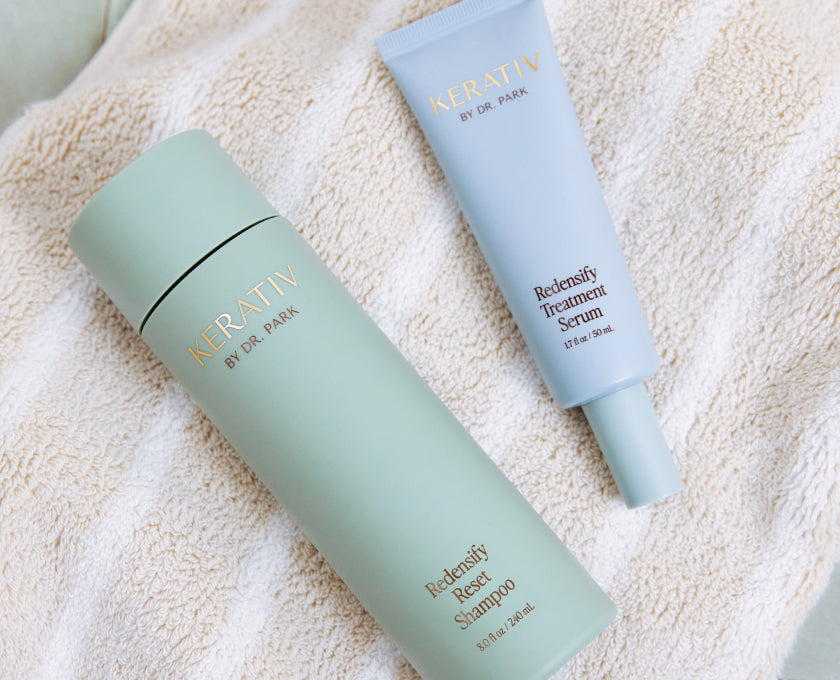
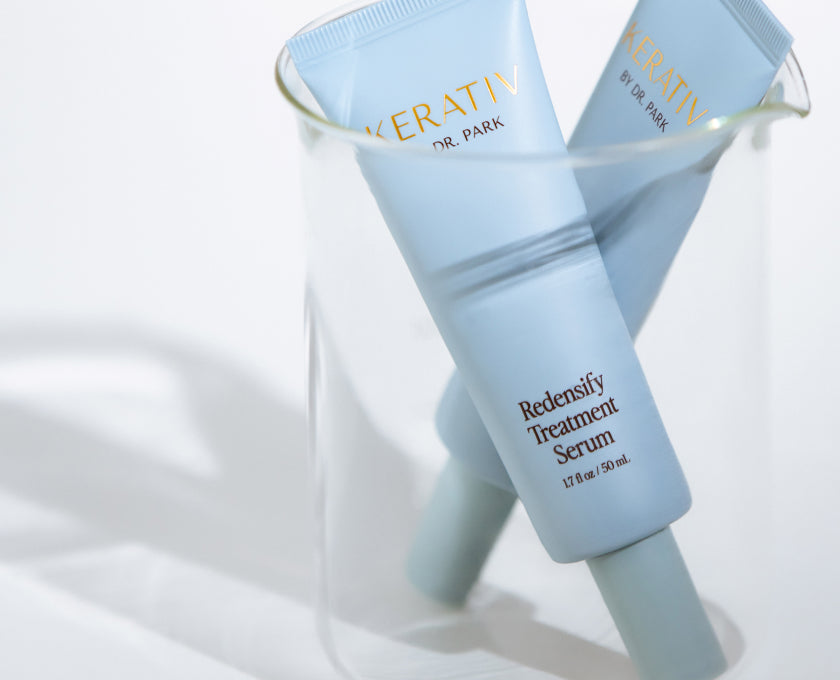
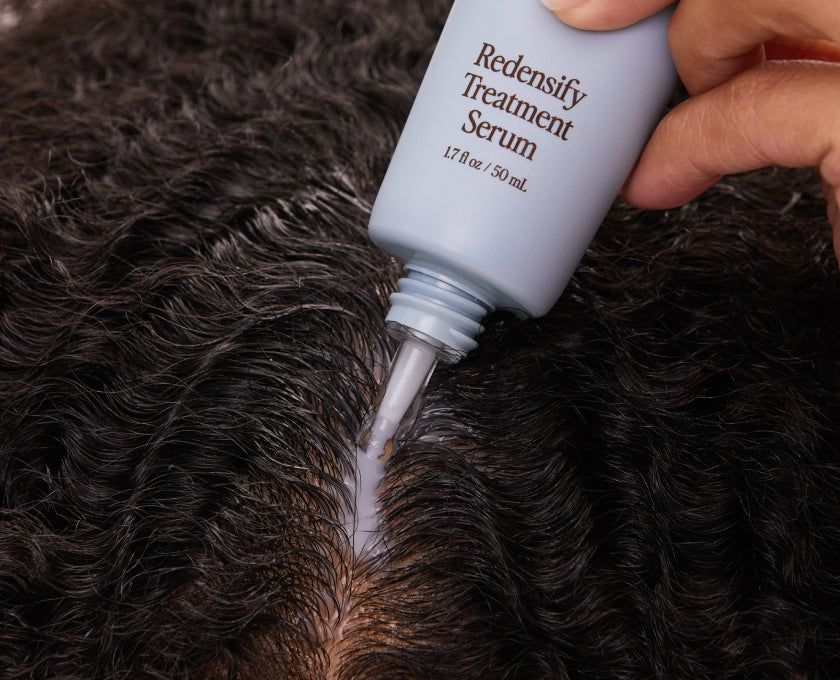
Redensify Treatment Serum
A dermatologist-developed, fragrance-free scalp serum that nourishes the scalp and follicles to support fuller, denser, healthier-looking hair. Apply twice daily to a dry scalp and leave in. Clinically shown to increase hair density and volume in 3 months, and thickness in 6.*
Why Scalp-First Care Matters Here
Clinically validated ingredients for follicle support
The Redensify Treatment Serum is formulated with clinically validated technologies including Redensyl, Kopexil, saw palmetto, adenosine, pumpkin seed oil and caffeine, to help nourish follicles and support the appearance of fuller, denser hair.
Support a stressed scalp
The serum helps support the scalp's natural barrier and overall scalp health, and it hydrates the scalp instantly without leaving residue.
Maintain a consistent twice-daily habit
Stress shedding is time-limited for most people. Using the serum twice daily without interruption keeps your scalp in the best possible state while your hair cycle resets.
Dermatologist-developed for sensitive, thinning scalps
Fragrance-free and alcohol-free, and formulated without sulfates or parabens. Vegan, cruelty-free and suitable for all hair and scalp types, including sensitive skin.
Cosmetic products are not drugs and are not intended to diagnose, treat, cure, or prevent any disease. If your hair loss is patchy, you have scalp symptoms, or your shedding lasts longer than 6 months, see a board-certified dermatologist. *Based on our 24-week clinical study with 32 participants, dermatologist-evaluated. Results may vary.
Frequently Asked Questions
Can stress cause permanent hair loss?
Telogen effluvium does not damage the follicles, so for most people the hair grows back once the cycle resets, even though it can take months. Alopecia areata can come and go, so it needs a dermatologist's care, and repeated hair pulling over many years is the situation I take most seriously. If your shedding has settled but your part still looks wider than before, it may be female pattern thinning that the shed made more visible, and that is worth having examined.
Should I get my cortisol tested for hair loss?
No, I do not test cortisol levels when I evaluate hair loss. What I do instead is take a thorough history and ask about potential stressors, both what is happening in your life now and what might have stressed you 3 to 4 months ago, because that earlier window is usually where the trigger is. I will often check ferritin and thyroid levels as well, because those can start or sustain shedding on their own.
Can anxiety about my hair make the shedding worse?
The shed you are seeing now reflects a stressor from a few months ago, so worrying about it today did not cause it. That said, stress that continues for a long time can keep shedding going, so I advise treating your own wellbeing as part of the plan, whether that means sleep, movement, support from people around you or talking to a professional, rather than something separate from your hair.
Do supplements help stress shedding?
Only if a deficiency is found, because supplementing something you already have enough of will not stop a stress shed. The deficiency I check most often is iron, and I explain how I read ferritin in iron deficiency hair loss, so I advise having bloodwork done with your physician before you start anything new rather than guessing.
When will the Redensify Treatment Serum start working?
Consistency is key. In the first few weeks, your scalp begins to rebalance, and some people notice a brief increase in shedding as follicles shift into a healthier cycle, which is normal and temporary. The Redensify Treatment Serum is clinically shown to increase hair density and volume in 3 months, and thickness in 6, so I advise using it twice daily without interruption and judging it at 6 months rather than at 6 weeks.
What to Read Next
To go deeper on the most common form of stress shedding, start with telogen effluvium. If your shedding began in late summer or early fall, seasonal hair shedding explains what is normal for the season, and if you have not had your iron checked, what your ferritin number actually means is the place to start.
Read more
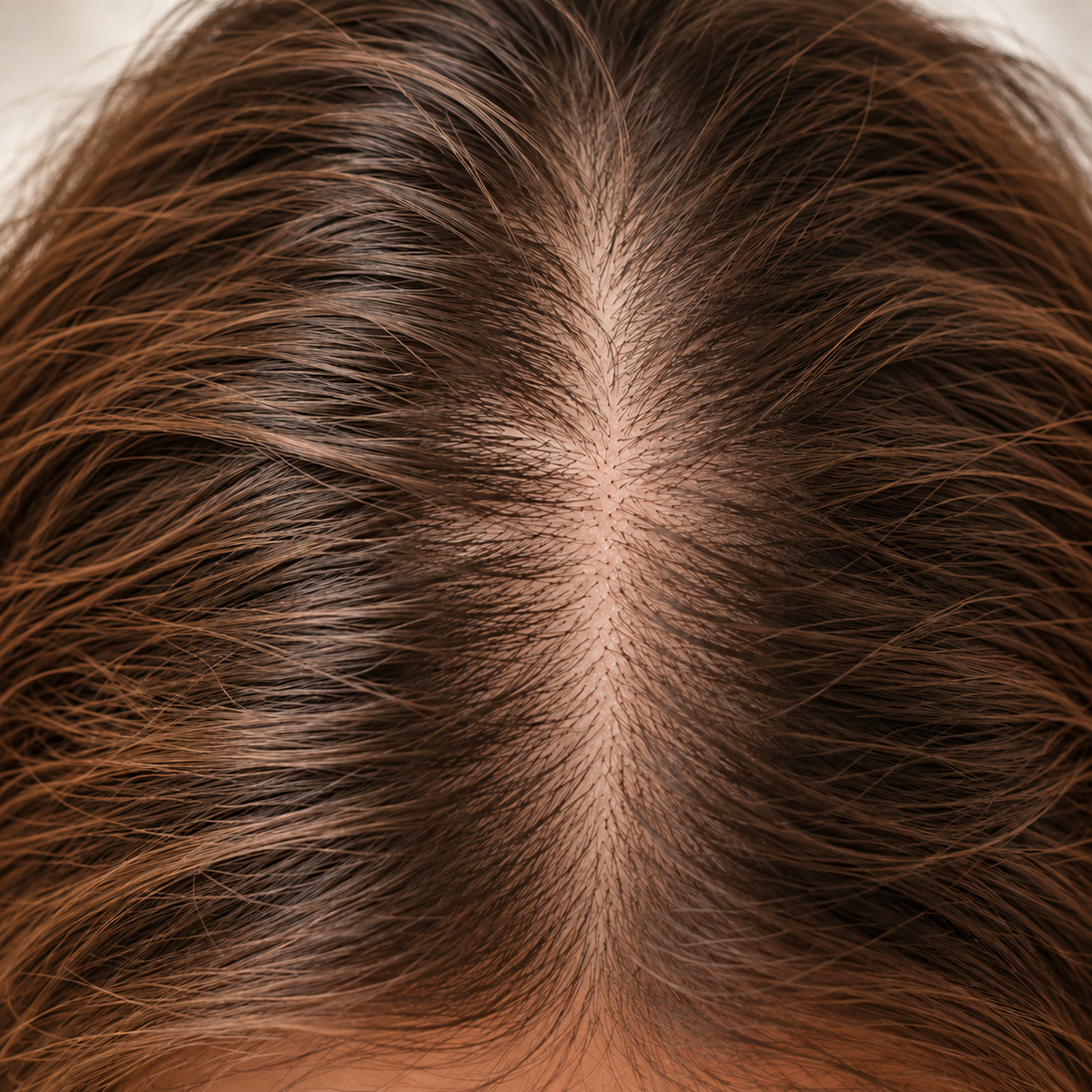
Diagnosed with PCOS and watching your part get wider? Scalp thinning is a real feature of PCOS, and it is less common than the facial and body hair most people associate with it. Dr. Park explains ...
More hair in the drain, or more scalp at your part? Shedding and thinning look alike from the mirror but come from different processes in the follicle. Dr. Park explains how to tell which one you h...